Download our free Monitoring Fundamentals Tutorial.
An introduction to Monitoring Fundamentals strictly from the perspective of telecom network alarm management.
1-800-693-0351
Have a specific question? Ask our team of expert engineers and get a specific answer!
Sign up for the next DPS Factory Training!
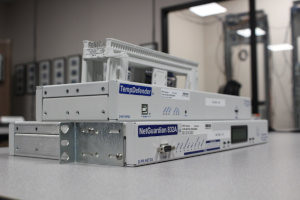
Whether you're new to our equipment or you've used it for years, DPS factory training is the best way to get more from your monitoring.
Reserve Your Seat Today(This article is intended to provide an introduction to remote site monitoring. It should be helpful to you if you have recently become involved in or responsible for this important area of contemporary network operations.)
"Remote site monitoring" involves tracking the status of equipment at distant locations.
A network, in this context, simply means any collection of equipment working in conjunction to provide some kind of revenue-generating service.
Railway companies have rolling stock, right-of-way assets and infrastructure equipment and facility that is a 'network' working in conjunction to provide transport services. The protection of this equipment is paramount for Railway companies to safely deliver freight and passengers to their intended destinations on schedule.
Utility companies have line assets, substation facility and equipment, and an increasing infrastructure reach all the way to the customer meter. For utility companies to provide good electricity, water, etc. service, they must effectively monitor the networked systems that are involved in providing that service.
Phone and cellular companies have multiple levels of central office facility, a wide variety of call management, and routing equipment and roadside (right-of-way) assets (i.e. BTS cabinets). If the phone company cannot keep its network online by establishing an effective remote site monitoring system, it will not be able to keep its customers happy, and they will quickly defect to a competitor.
In each of these cases, a collection of equipment is involved in providing services. This equipment is usually deployed in a large number of geographically dispersed locations, commonly referred to as "remote sites". Monitoring this equipment, and the remote sites that contain them, is an important part of providing services at these types of companies.
Although the technical specifics vary between remote site monitoring systems, they all share a common general topology.
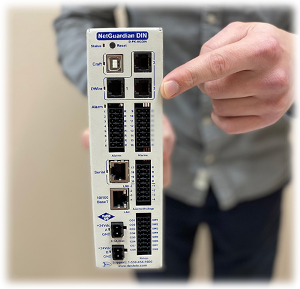
Remote devices, commonly known as RTUs (remote telemetry units or remote terminal units), are deployed at each remote site to collect system alarms from the equipment there and monitor the surrounding environment for critical conditions like temperature, humidity, and physical intrusion. At DPS Telecom, we build the NetGuardian RTU family specifically for this role, purpose-built units that have been deployed across more than 1,500 organizations to do exactly this kind of continuous, unattended monitoring.
After alarm data has been collected at each remote site, it must be aggregated and presented to a human operator. This is the job of a central master station. DPS Telecom's T/Mon LNX alarm master station is designed for this role, consolidating alarms from NetGuardian RTUs and third-party equipment across your entire network into a single operator view. These master stations necessarily have much more processing power than the average remote device, although they may not have the same level of protection against industrial environments (they are typically deployed in offices rather than remote huts and cabinets). Master stations commonly feature redundant architecture, and simultaneously running a redundant pair of master stations is an industry best practice for superior remote site monitoring.
With both of these device types working together, human operators are able to accomplish remote site monitoring. They have a good situational awareness across perhaps thousands of square miles containing remote sites. If a problem arises at a site, an appropriate response can be issued to ensure that a particular remote site problem does not fester until it becomes a widespread network outage. If you're building or upgrading a remote site monitoring system, DPS Telecom engineers are available to help you spec the right RTUs and master station for your network. Call us at 800-693-0351 or contact us online.
Remote Site Monitoring.Similar Topics: | Remote Server Monitoring.Similar Topics: |
Site Monitor.Similar Topics: |
Related Topics:
Remote Site Monitor
Monitor Your Microwave Sites
Remote Server Monitor
Site Monitor Software
Related Products:
Remote Site RTU
Remote Site Master Station
Alarm Monitor Remote
T/Mon Alarm Master