Check out our White Paper Series!
A complete library of helpful advice and survival guides for every aspect of system monitoring and control.
1-800-693-0351
Have a specific question? Ask our team of expert engineers and get a specific answer!
Sign up for the next DPS Factory Training!
Whether you're new to our equipment or you've used it for years, DPS factory training is the best way to get more from your monitoring.
Reserve Your Seat Today
You've got dozens of unmanned sites, maybe a few hundred, and the platform watching them is up for review. Maybe a bid is open. Maybe ATLAS came up in a procurement conversation and someone asked what else belongs on the list. Either way, you need names, with enough on each one to tell which of them fits the sites you actually run.
Remote site monitoring comes down to a handful of credible manufacturers, and what separates them is engineering philosophy. The questions that decide fit are who builds the hardware at the site, who builds the master station, where the software runs, and how far that hardware can be changed to match what's already installed.
DPS Telecom has been designing and building both halves of that chain in Fresno, California since October 1986. We've shipped more than 172,800 devices to over 1,500 companies, and the philosophy behind all of them is that the monitoring should be built around the sites you already have.
DPS Telecom, Asentria, Davicom, Westell, Dantel, and Galooli all build hardware, software, or both that can stand in for a Multitel ATLAS deployment. General-purpose network management platforms like SolarWinds and Castle Rock belong on the list too, as a master station your remote telemetry units (RTUs) report into.
| Manufacturer | Main products | Deployment model | Site hardware and master from one vendor | Built for |
|---|---|---|---|---|
| DPS Telecom | NetGuardian RTUs, T/Mon master station | On premises, owned outright | Yes, plus custom-engineered hardware | Carriers, rural telcos, utilities, public safety, and transportation running unmanned sites with mixed-vendor equipment |
| Multitel | FUSION, iO Supervisor, iO Gateway, iO mini; ATLAS and FIRMSuite software | Cloud subscription (ATLAS) or on premises (FIRMSuite) | Yes | Power and cooling asset monitoring for telecom and power utilities |
| Asentria (Trystar) | SiteBoss S370 and S240 controllers, Asentria Site Manager | On premises and private cloud | Yes | Standardized rollouts using card-based expansion and on-site scripting |
| Davicom (Comlab) | Cortex 320, Cortex 360 | Standalone edge unit with embedded web interface | Unit-level, no separate master required | Broadcast, public safety, and wireless sites needing autonomous local control |
| Westell | Remote RMX-4000, RMX-3800 | On premises or cloud, software agnostic | Yes, and reports to third-party systems | Wireless carriers and tower operators feeding an existing operations support system |
| Dantel | PointMaster, WebMon, VisionMaster | On-premises master station | Yes | Central offices and outside plant facilities with wire-wrap alarm terminations |
| Galooli | Galooli platform, software only | Cloud subscription | No, software only | Tower companies and microgrid operators managing mixed energy assets |
| SolarWinds, Castle Rock, and similar | Orion, SNMPc, and other network management platforms | On premises or hosted | No, software only | Enterprise information technology groups and mixed network operations centers |
(The above data was gathered by reviewing published vendor product information. It may not capture the full breadth of available models, and some details may have changed since they were reviewed.)
DPS Telecom is a strong fit when you're running 25 to 300 unmanned sites, your equipment came from several manufacturers over several decades, and you'd rather own the master station outright than pay for it by subscription. We build the RTUs and the master station, we modify the hardware to fit the racks and wiring you already have, and the support line is answered by our engineers rather than a call center. If that describes your network, put us on the shortlist.
Multitel has more than 40 years in remote site monitoring, and they describe ATLAS as a "Web-based platform for network monitoring and asset data analytics." It's delivered as a cloud-hosted subscription. We did not find public ATLAS pricing on Multitel's website at the time of review, so it's possible that a number comes back after you submit your site specifications to their sales team.
On the site side, ATLAS pairs with Multitel's own hardware. The FUSION RTU, the iO Gateway, the iO Supervisor, and the iO mini collect Modbus, BACnet, and analog sensor data from power and cooling equipment, then pass that data upstream over an encrypted Internet Protocol (IP) connection. Multitel also offers FIRMSuite, an on-premises application that runs on a local Windows server for organizations that need the software inside their own network.
Power and cooling are the emphasis throughout. Multitel positions ATLAS around direct current (DC) power plants, battery strings, cooling units, and uninterruptible power supplies, and their FCCP hardware monitors float current on battery strings to catch cell degradation.
Whether that software should run inside your own network or in a vendor's cloud is the subject of our DPS Telecom vs Multitel ATLAS comparison, which also covers data sovereignty and how the two models compare over a ten-year horizon.
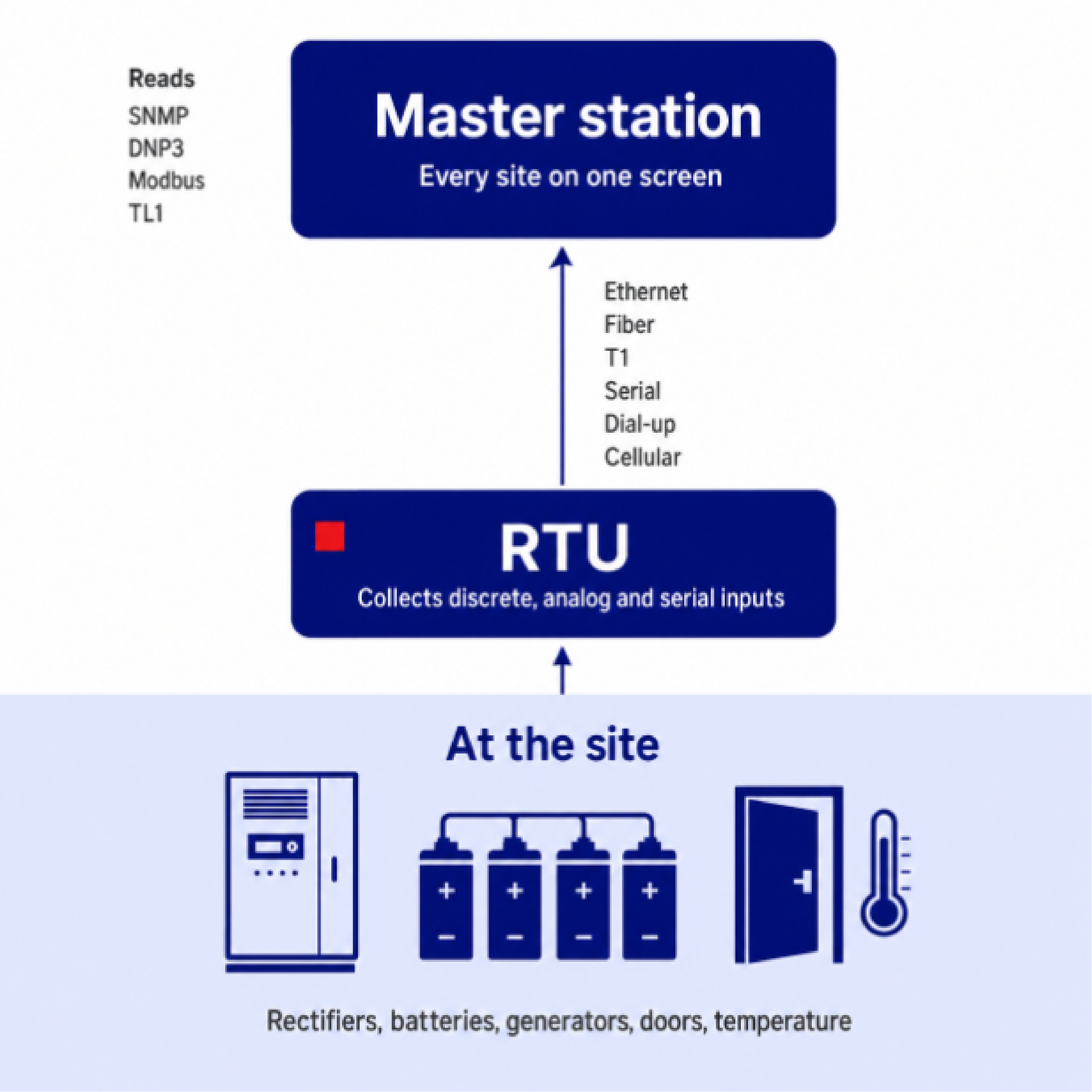
DPS Telecom's NetGuardian RTUs sit at the site and collect alarms. The T/Mon master station sits at your operations center and aggregates everything those RTUs and your other equipment send it. Both are designed, built, and tested in the same building in Fresno.
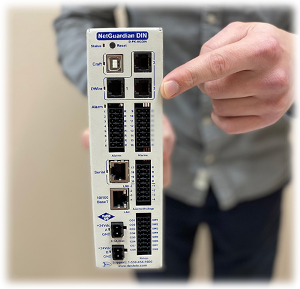
Our NetGuardian RTUs accept discrete alarms, analog inputs, and serial data at the remote site, and they report upstream over Ethernet, fiber, T1, serial, and dialup, plus cellular and satellite through an external gateway. Analog inputs are what catch a problem while the reading is still moving in the wrong direction, before the equipment quits on you. Battery voltage, generator fuel level, rectifier output, temperature, and humidity all arrive as analog values with thresholds you set. Control relays let you reset a locked-up piece of equipment from your desk instead of driving to the site.
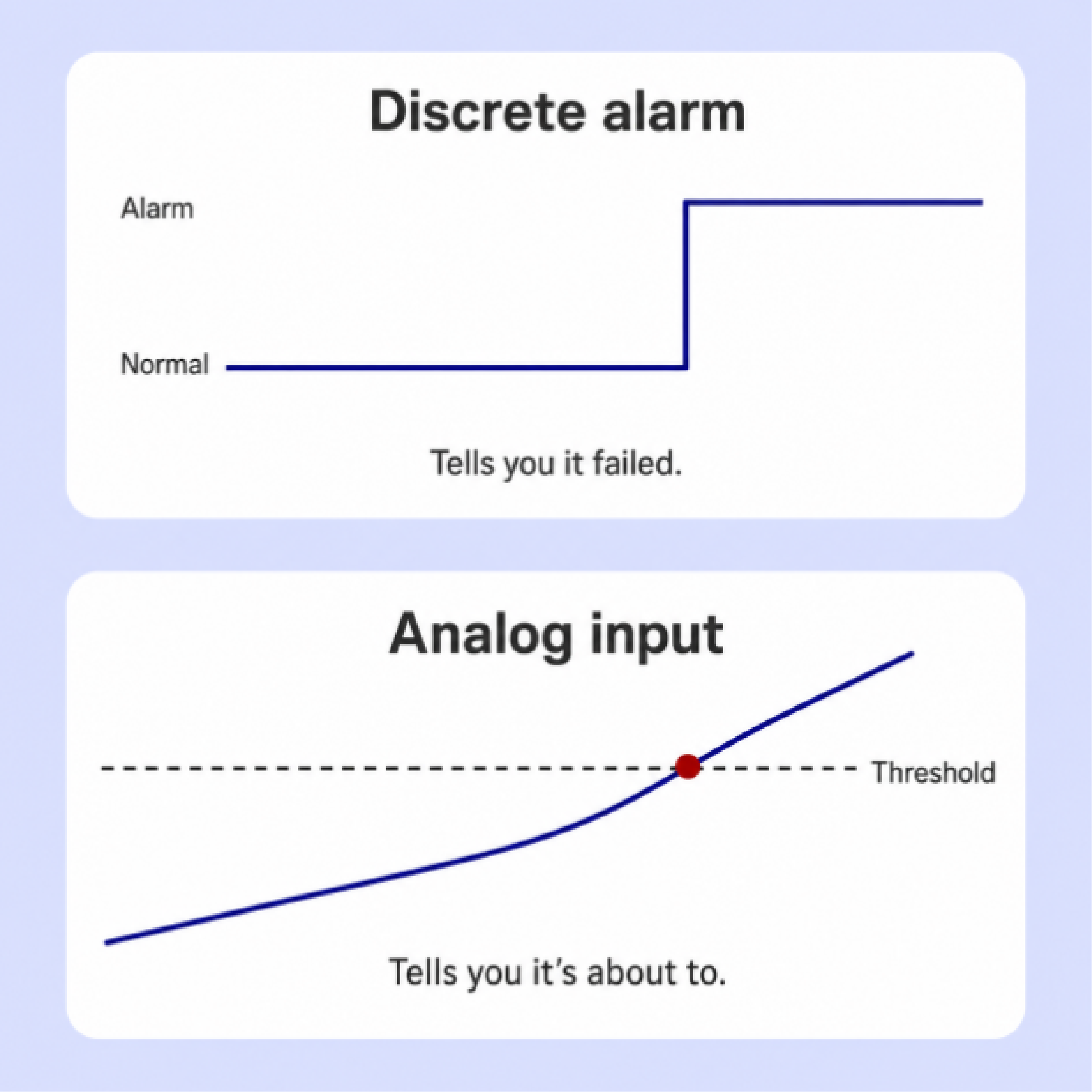
County and utility sites usually need analog and discrete on the same box. Fred Marvin at Steuben County Office of Emergency Services runs that combination across nine tower sites plus a 911 center.
"We are monitoring nine tower sites, plus our 911 center. We are getting analog inputs for generator voltage, and microwave signal fade. Discrete alarms might be door entry, or temperature high/low, things like that."
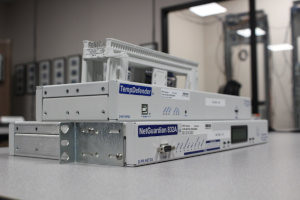
Capacity scales with the site. A cabinet with a handful of alarm points gets a small unit, and a site with a full rack of gear gets something like the NetGuardian G6 832A, which covers an entire site from one chassis. If a site only needs temperature, humidity, and water detection, the TempDefender G2 covers it without paying for alarm capacity you'll never wire up. The full remote telemetry unit lineup fills in everything between those two points.
T/Mon collects from NetGuardian RTUs and from equipment we didn't build, reading more than 30 protocols. The list includes Simple Network Management Protocol (SNMP) v1, v2c, and v3, Distributed Network Protocol 3 (DNP3), Modbus, Transaction Language 1 (TL1), and a range of ASCII formats. T/Mon LNX, the largest version, handles up to 9,999 RTUs and 999,999 alarm points.
That protocol list grew one client request at a time. When someone needed a format T/Mon didn't speak yet, we wrote it, and most T/Mon orders are large enough that the development gets bundled into the purchase instead of billed separately.
The two halves are sold separately. NetGuardian RTUs report to any standard SNMP manager, so a team already running SolarWinds or Castle Rock with a built and working database can add our RTUs underneath the existing master and leave the master alone.
Our standard modules cover roughly 80% of what a monitoring project needs. The other 20% is where something has to change, whether that's a chassis depth that fits an existing rack, a connector pinout that matches wiring already in place, or an alarm voltage outside the standard range.
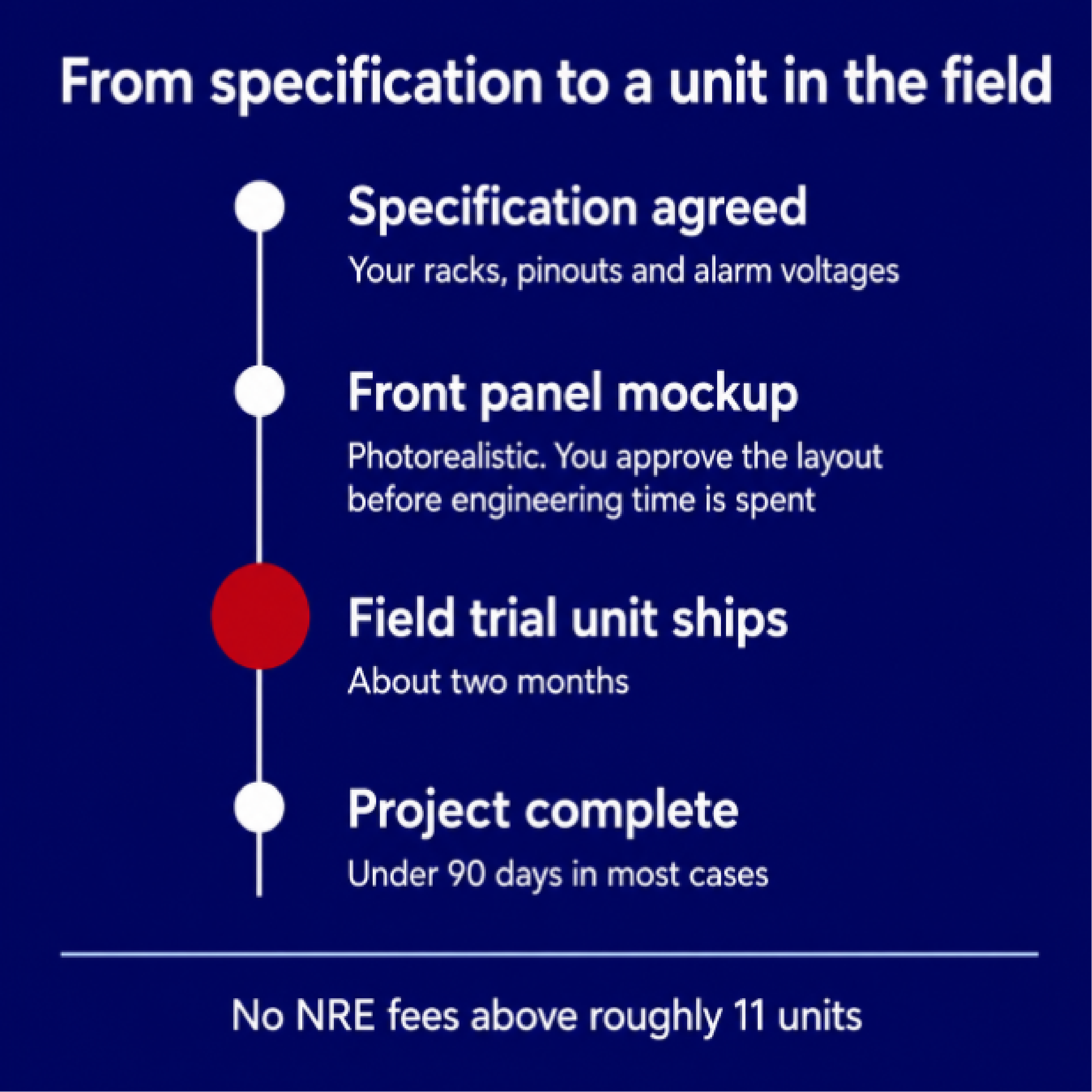
We build those in house, and we don't charge non-recurring engineering (NRE) fees when the order runs above roughly 11 units. The work starts with a photorealistic mockup of the front panel, so you can see the layout and ask for changes before engineering time gets spent. A field trial unit typically ships about two months after that. Of the devices we've shipped, more than 9,800 were customized builds.
Circuit board assembly, chassis fabrication, firmware, and testing all happen in Fresno under ISO 9001 procedures, so a design change takes weeks instead of waiting on an outside supplier's schedule.
Support comes from Fresno too. The 24x7 emergency line is answered by engineers rather than a call center working from a script, product support is free for the life of the product, and factory training runs at our headquarters. Hardware carries a two-year warranty that a maintenance agreement extends indefinitely. If you want to see a unit in your own environment first, our 30-day loaner program ships one out and you pay only the shipping.
Asentria builds the SiteBoss line of site controllers, including the S370 and S240, along with the Asentria Site Manager software. They describe SiteBoss as bringing "intelligent automation to remote sites, with flexible hardware for every need." Trystar, an electrical power equipment manufacturer, acquired Asentria in September 2025.
The architecture is modular. SiteBoss chassis take expansion cards, and Asentria publishes more than 40 of them covering alarm points, serial ports, power monitoring, and sensors. Cards let each site be configured differently, and the spares plan has to account for the cards as well as the chassis.
SiteBoss units run a Lua scripting engine on board, so a site can execute its own logic, exercising a generator or shedding load, without waiting on the master station. Northbound, they report over SNMP and Modbus, plus message-broker and web application interfaces for pushing data into cloud systems.
Davicom, a division of Comlab, designs and manufactures the Cortex series in Canada. They describe the Cortex 360 as "a versatile and intelligent unit that is very reasonably priced."
The Cortex 320 and 360 are built to run a site on their own. Each unit carries 128 virtual logic gates for local decisions, differential analog metering inputs, and built-in audio detection and streaming, so you can listen to a radio feed or site audio remotely. A Cortex works as both an SNMP agent and an SNMP manager, which lets one unit poll the IP-enabled equipment at a site and report a consolidated view upstream. The operating range runs from minus 40 to plus 80 degrees Celsius.
Broadcast and public safety radio sites are the core market. Local audio monitoring and autonomous on-site logic matter more in that environment than they do at a fiber hut or a data transport site.
Westell builds the Remote RMX series for wireless carriers, tower operators, and utility networks. They describe the RMX-4000 as enabling "remote site alarm monitoring, intelligent protocol conversion, wireless device aggregation."
The RMX-4000 runs on either +24 or -48 volts DC, includes four Power over Ethernet ports for running site cameras or expansion collectors, has a fiber transceiver slot, and supports Westell's own SiteBus sensor interface. The line is built to be software agnostic, feeding either Westell's Optima Management System or a third-party operations support system (OSS) over SNMP.
Tower work is the natural fit. Pulling tower lighting controllers, generator panels, and environmental sensors into an OSS a carrier already runs is what the RMX line is designed around.
Dantel is a remote monitoring manufacturer based in Fresno, California. The product line covers PointMaster and WebMon on the site side, with VisionMaster as the management platform.
Their equipment is built for central offices, telecom huts, and outside plant cabinets that need physical wire-wrap alarm termination, discrete alarm consolidation, and TL1 mediation. Detailed specifications are quoted through their distribution channels rather than published, so plan on requesting them directly.
Galooli sells software rather than hardware. They describe their offering as providing "monitoring and management of energy assets and on-site machinery" with live alerts, delivered as Energy Management as a Service.
The platform is hardware agnostic. It ingests data from third-party rectifiers, diesel generators, solar controllers, and smart battery management systems without requiring you to install Galooli RTUs first. Operators can push configuration changes across a fleet and issue start and stop commands from the web interface.
Tower companies and microgrid operators are the target, particularly the ones running energy hardware from a dozen different manufacturers across hundreds of sites. Fleet-level energy forecasting and emissions reporting are what the platform is built to produce.
General-purpose network management platforms fill the master station role for teams that already run one. Orion, SNMPc, Nagios, and similar tools collect SNMP traps and poll device data across multi-vendor hardware, and NetGuardian RTUs report into any of them.
General-purpose network management platforms are typically oriented toward IP networks, servers, and network devices, while dedicated telecom alarm masters such as T/Mon LNX from DPS Telecom are designed around site-based alarm monitoring and legacy telecom protocol mediation. Plenty of networks run this way on purpose, with the information technology group on their existing platform and the facilities group on a dedicated alarm master.
Network Equipment-Building System (NEBS) is the family of Telcordia requirements carriers use to decide whether hardware is allowed into a central office or an outside plant cabinet. Two documents carry the requirements. GR-63-CORE covers physical protection, meaning temperature and humidity range, fire resistance, airborne contaminants, vibration, and survival through a Zone 4 earthquake. GR-1089-CORE covers electromagnetic compatibility and electrical safety, meaning electrostatic discharge immunity, lightning surge tolerance, alternating current power fault immunity, and bonding and grounding.
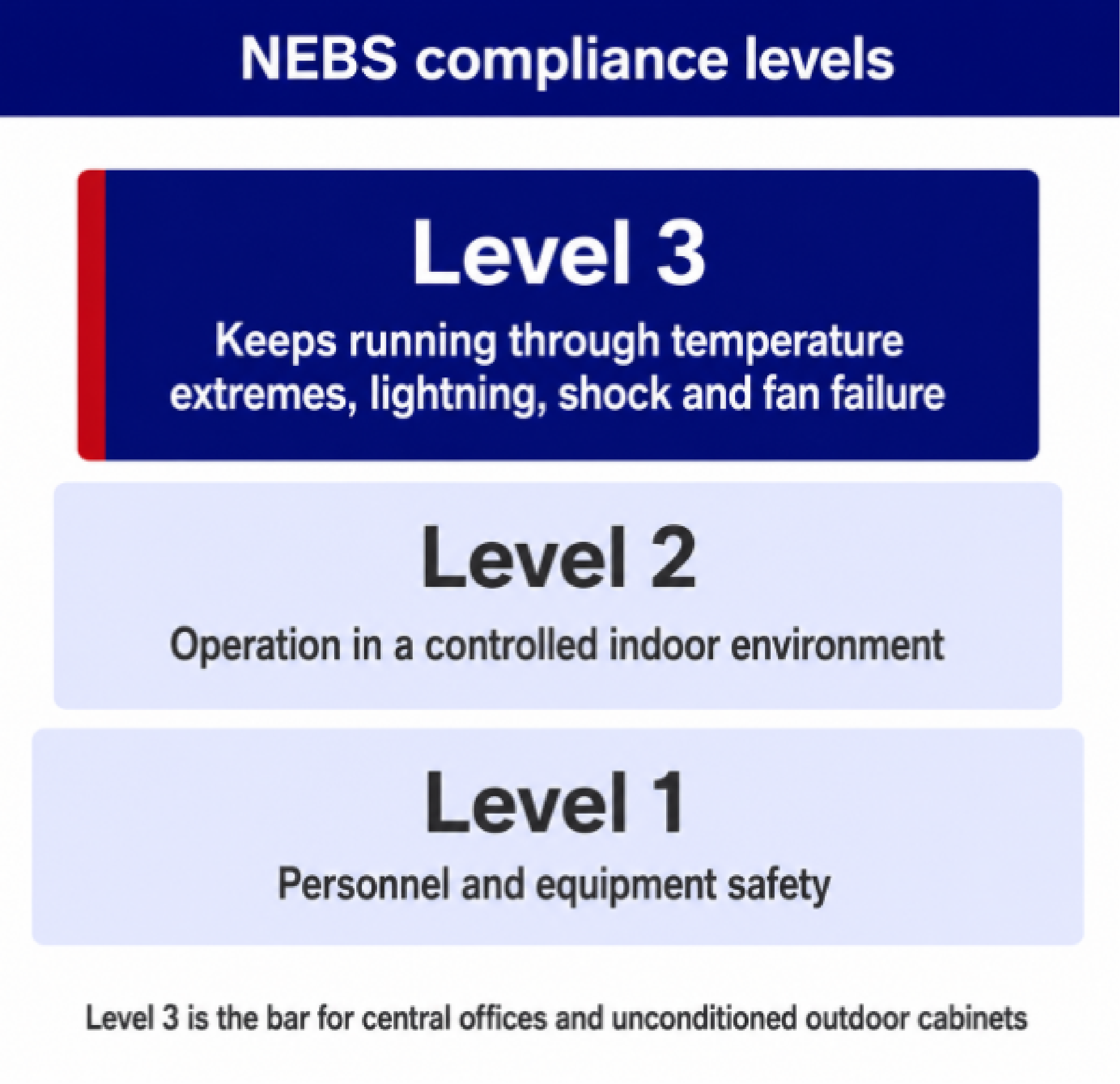
NEBS compliance comes in three levels, and Level 3 is the one that matters for unmanned sites. Level 1 covers basic personnel and equipment safety, and Level 2 covers operation in a controlled indoor environment. Level 3 requires the equipment to keep running through temperature extremes, lightning strikes, physical shock, and fan failure. Carriers commonly require that level before hardware goes into a central office or an unconditioned outdoor cabinet, and telecom equipment manufacturers are increasingly asking their own component suppliers to demonstrate NEBS compliance, writing the requirement into requests for proposal and supplier contracts, according to In Compliance Magazine.
DPS Telecom runs NEBS compliance testing in house as part of manufacturing. Our hardware is designed for wide voltage tolerance, power surge protection, and continuous operation across the temperature extremes an unconditioned cabinet actually sees. It's also built to take the physical handling and vibration that come with a mountaintop hut or a trackside enclosure. Our guide to NEBS-compliant equipment walks through what each requirement protects against.
That build standard shows up in field life. Our equipment routinely runs past 20 years in service, which spreads the purchase price across two decades of budgets. A senior communications engineer at a state department of transportation said the same about their own units.
"We've always been very pleased with DPS Telecom's RTUs. They've lasted for 20 years."
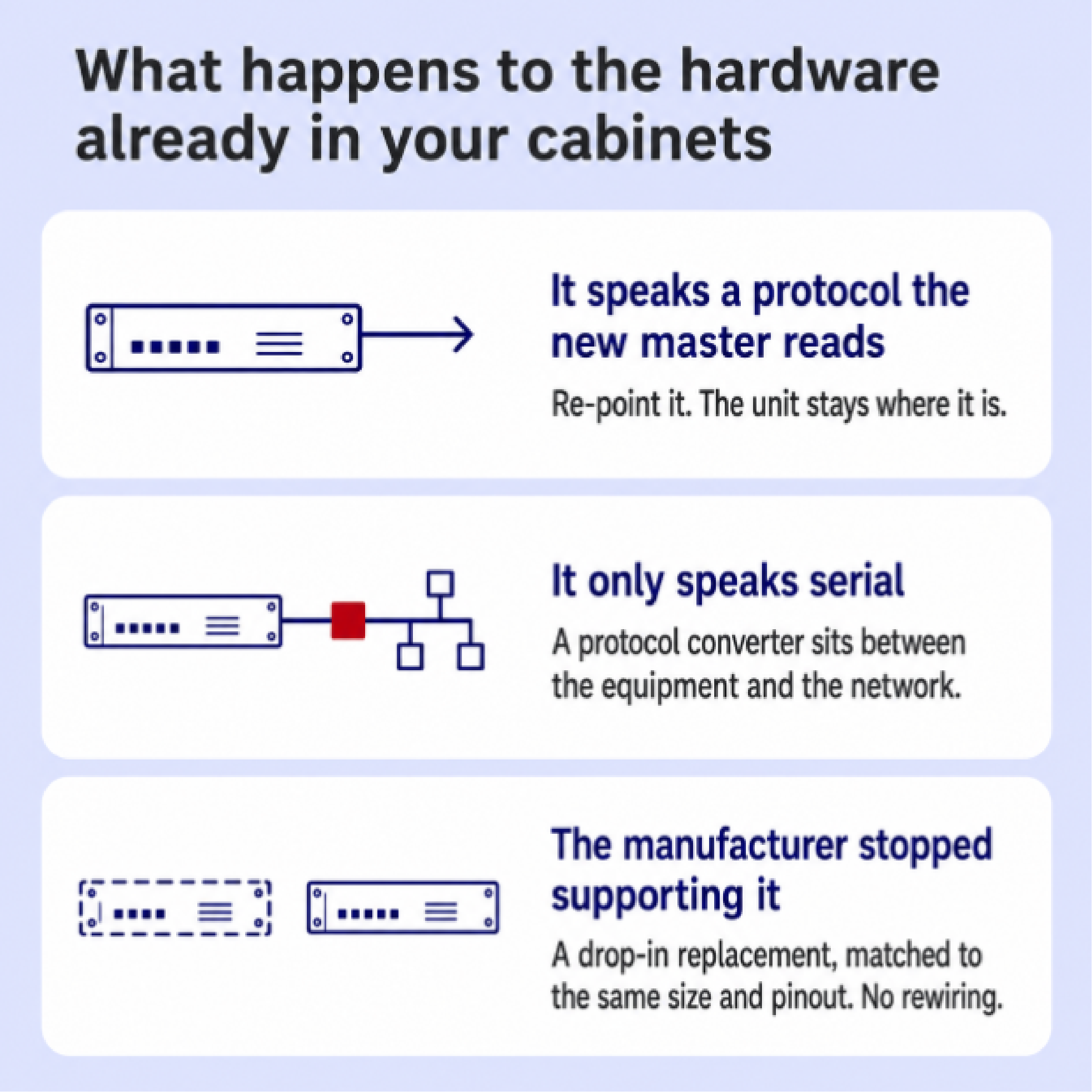
In most cases, yes. T/Mon collects from third-party RTUs over SNMP and more than 30 protocols in total, so changing master stations doesn't have to mean pulling working hardware out of sites that were hard to reach in the first place.
Multiprotocol alarm monitoring exists so mixed-vendor and older equipment can show up on one screen without a rip-and-replace project. Dominion consolidated three separate proprietary alarm systems onto a single T/Mon platform, with the field equipment staying exactly where it was.
The easier migration is equipment that still works and just speaks a protocol the new master needs to understand, which is what legacy alarm integration solves. Where the gap is serial data from rectifiers or generators, a Modbus to SNMP converter sits between the equipment and the network and translates.
The harder one is hardware a manufacturer has stopped supporting, where the unit does have to come out. We build drop-in RTU replacements sized and pinned to match what's being removed, so the cabinet doesn't need rewiring and the technician doesn't need a full day at the site.
Bob Berry, our CEO and co-author of 100% Uptime, puts the protocol question ahead of the purchase.
"Choose your protocol(s) carefully, as you need everything to communicate in one harmonious management system. Fractured systems are a great way to build confusion and drive up costs."
Ask every vendor on your shortlist the same questions, and ask them before you start comparing quotes. The answers narrow a list faster than a feature grid does.
| What to check | What to ask the vendor |
|---|---|
| Protocol breadth at the master | Which protocols does the master station read natively, and what happens when a device speaks something that isn't on the list? |
| One vendor edge to master | Does the same company build the site hardware and the master station, or are you integrating two suppliers and arbitrating between them? |
| Custom hardware engineering | Can the chassis, connector pinouts, and alarm voltages be changed to fit what's already installed, and what does that cost? |
| Environmental and NEBS testing | What temperature, humidity, and surge conditions has this hardware been tested against, and to what NEBS level? |
| Support model | Who answers the phone at 2 a.m., and is that person an engineer or a call center representative? |
| Field life and warranty | How long does this hardware last in service, how long is the warranty, and can it be extended? |
| Transport options | If the primary connection at a site drops, what backup path can the unit fall back to? |
Our complete buyer's guide to remote telemetry units goes deeper on capacity planning and transport selection, and our rundown of RTU and master station manufacturers covers the wider category if your shortlist is still forming.
Davicom's Cortex units are built for broadcast and radio sites where an engineer needs to hear the actual audio feed. Audio detection and streaming are on-board functions there, and a general-purpose telecom RTU doesn't include them.
Fleet-level energy analytics is what Galooli built. If the deliverable your organization needs is fuel consumption trending and emissions reporting across hundreds of sites rather than alarm response at individual ones, a cloud analytics layer over hardware you already own does that job without a hardware program attached to it.
Standardized rollouts of thousands of near-identical cabinets favor a card-based off-the-shelf controller like SiteBoss, where the value is a repeatable build, a template configuration, and a central stock of expansion cards.
Central offices with wire-wrap termination assemblies already in place and TL1 mediation requirements are what Dantel's PointMaster line is built around.
If your team already runs a network management platform with a built database and everyone trained on it, keeping that master and adding RTUs beneath it is a reasonable answer. Our RTUs report to standard SNMP managers, so choosing a master station and choosing an RTU manufacturer don't have to be the same decision.
If the unit reports over SNMP, yes. T/Mon reads SNMP v1, v2c, and v3 along with more than 30 protocols in total, and any RTU or gateway that sends SNMP traps or answers polls can report into it. Send us the device's management information base (MIB) file and we'll confirm before you commit to anything.
Under about 10 sites, the web interface on each RTU plus email and text alerts is usually enough. Past that, logging into units one at a time stops being workable and a master station starts paying for itself. If you already run an SNMP manager, our RTUs report into it and you don't need to buy a second master.
Yes. T/Mon is a hardware and software appliance that runs inside your own network, with no outside connection required and no per-site subscription. Utilities, public safety agencies, and carriers operating on restricted or air-gapped networks are the usual reason this comes up in an evaluation.
Roughly two months from an agreed specification to a field trial unit, and under 90 days for the full project in most cases. It starts with a photorealistic mockup so you can see the layout and change it before engineering time gets spent. Above roughly 11 units, there's no NRE charge.
DPS Telecom designs, manufactures, and tests everything in Fresno, California. Dantel is also based in Fresno. Davicom manufactures in Canada. For anyone else on your list, confirm manufacturing location directly, since it affects lead times, custom engineering turnaround, and procurement rules if you're buying with public money.
If you're building a shortlist right now, the quickest way to find out whether we fit is to describe your sites to us: how many there are, what's inside them, what you're already running, and what the master station needs to talk to. Our application engineers will tell you honestly whether a NetGuardian and T/Mon setup makes sense for your network or whether another manufacturer suits it better. The 30-day loaner offer stands if you'd rather put your hands on the hardware before deciding anything.
Talk to an Engineer | 800-693-0351

Andrew Erickson
Andrew Erickson is an Application Engineer at DPS Telecom, a manufacturer of semi-custom remote alarm monitoring systems based in Fresno, California. Andrew brings more than 19 years of experience building site monitoring solutions, developing intuitive user interfaces and documentation, and opt...