Check out our White Paper Series!
A complete library of helpful advice and survival guides for every aspect of system monitoring and control.
1-800-693-0351
Have a specific question? Ask our team of expert engineers and get a specific answer!
Sign up for the next DPS Factory Training!
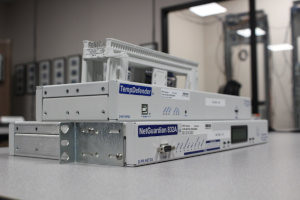
Whether you're new to our equipment or you've used it for years, DPS factory training is the best way to get more from your monitoring.
Reserve Your Seat TodayA rectifier failure can take down commercial power at a site without any immediate visible impact. Backup batteries and generators can keep the site online for days. Without monitoring in place, no one knows anything happened until the fuel runs dry and the site goes dark.
That scenario isn't hypothetical. We've heard versions of it from clients across multiple industries. The rectifier fails, the generator runs unattended for five days, burns through its fuel, and only then does anyone find out there was ever a problem. By that point, every backup system is depleted.
Remote rectifier monitoring catches these failures at step one, before backup systems are depleted and options run out.
Talk to an Engineer | 800-693-0351
Monitoring a rectifier remotely typically involves a combination of discrete alarm contacts and analog voltage readings. Most rectifiers output a contact closure for fault conditions like "major alarm." That contact closure alone is enough to tell you something is wrong and trigger an investigation, even if it doesn't tell you exactly what.
Beyond that, analog voltage monitoring gives you a continuous read on rectifier output. You'll see immediately if the output is too high, too low, or has dropped to zero.
Common rectifier monitoring points include:
When you monitor the voltage outputs from your rectifier, generator, and battery plant together, you can tell which one is outside its proper range. That distinction matters when you're deciding who to dispatch and what parts to bring.
A rectifier failure doesn't always mean zero output. In some failure modes, the rectifier outputs voltage that's too high for the connected battery string. The batteries then overcharge and can be permanently damaged. We've heard from clients whose batteries physically expanded inside their metal trays, deforming enough that they had to be cut out. Replacing the battery string was expensive; the labor to remove them was even more so.
Monitoring output voltage with configurable high/low thresholds lets you catch this before it reaches the battery plant. When the voltage reading crosses a threshold, you get an alert. You don't need someone on-site to notice a problem that could be building over hours.
A Remote Telemetry Unit (RTU) is the device that sits at your remote site and collects alarm data from the equipment around it. For rectifier monitoring, RTUs use two primary methods:
Discrete alarm inputs (contact closures): Your rectifier latches a contact when it detects a fault. The RTU reads that contact state and sends an alarm to your NOC or directly to a technician via email, text, or SNMP trap.
Analog inputs: The RTU measures voltage directly. Some RTUs have internally wired analog inputs that can automatically monitor the power feeding into their own input circuits, which means you can monitor site power as a side effect of having the RTU installed.
Protocol-based data collection: More modern rectifier systems output data via Modbus or SNMP. RTUs with protocol support can pull register values directly from the rectifier, giving you detailed operational data rather than just a binary alarm contact.
If you have more than a handful of sites, managing rectifier alarms through individual RTU web interfaces becomes impractical fast. An alarm master station aggregates data from all your RTUs into one display. When a rectifier alarm fires at any site, it surfaces in your central view rather than sitting silently in a device-specific interface you'd have to log into separately.
DPS Telecom's T/Mon LNX alarm master supports 35+ protocols, including SNMP, Modbus, DNP3, TL1, and others. That breadth of protocol support is useful for rectifier monitoring because different rectifier manufacturers use different output formats. If your network includes equipment from multiple vendors across different generations, T/Mon can consolidate those alarms under a single pane regardless of the protocol each device speaks.
When a technician gets dispatched, they need to arrive with the right tools and the right parts. That means the alarm that sent them needs to be specific: which unit, what type of fault, what severity. A two-hour drive to a "major alarm" that turns out to need a part back at the office is an entire wasted workday, and a significant truck roll cost.
An alarm that reads "Rectifier module failure on unit 3" is enough to send the right person with the right parts. An alarm that reads "Major alarm" sends anyone, empty-handed, on a recon trip.
DPS Telecom's monitoring systems are built to deliver descriptive alarm messages that identify what failed, where, and at what severity level. Different alert types can also be routed to different people so that a rectifier alarm reaches the power technician who knows how to handle it.
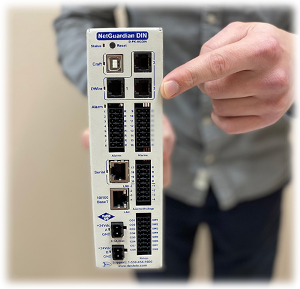
DPS Telecom has been building remote monitoring equipment since 1986 and has deployed more than 172,000 devices across 1,500+ organizations. Our NetGuardian RTUs support analog voltage monitoring, discrete alarm inputs, and protocol-based data collection, covering the full range of how rectifiers communicate status.
We've built monitoring systems for telecom carriers, electric utilities, public safety networks, and transportation authorities. The common thread: clients needed to know what was happening at their remote power infrastructure before a problem cascaded into a service outage.
If you have existing rectifier equipment you need to integrate, we can work with whatever output formats your devices support. And if you need something configured specifically for your setup, our engineering team can develop custom configurations without NRE fees for qualifying orders.
See what rectifier and power systems integrate with T/Mon
Talk to an Engineer | 800-693-0351
A rectifier monitoring system measures DC output voltage, AC input status, and fault alarm contacts. More advanced setups collect operational data via Modbus or SNMP directly from the rectifier's controller.
Yes. DPS Telecom's T/Mon LNX supports 35+ protocols, which allows it to aggregate alarm data from rectifiers that use different communication formats under a single interface.
A rectifier alarm is typically triggered by a fault condition inside the unit (output voltage out of range, module failure, AC input loss) that latches a contact closure or sends a protocol-based trap or register value change.
An RTU with analog inputs connects to the rectifier's voltage output. The RTU reads the voltage continuously and generates an alarm if the reading crosses a configured high or low threshold. That alarm can be forwarded as an email, text, or SNMP trap.
A contact closure alarm is binary: it tells you a fault has occurred. Analog voltage monitoring gives you a continuous numerical reading, so you can see gradual trends like a slow voltage drop or incremental over-voltage before a hard fault is triggered.