Check out our White Paper Series!
A complete library of helpful advice and survival guides for every aspect of system monitoring and control.
1-800-693-0351
Have a specific question? Ask our team of expert engineers and get a specific answer!
Sign up for the next DPS Factory Training!
Whether you're new to our equipment or you've used it for years, DPS factory training is the best way to get more from your monitoring.
Reserve Your Seat TodayFrontier Communications of Burnsville, Minnesota upgraded alarm monitoring by deploying DPS Telecom T/Mon LNX with T/GrafX graphical views. The change delivered a more visual, operator-friendly way to identify and prioritize network alarms across their footprint.
| Industry | Telecommunications |
|---|---|
| Company | Frontier Communications (Burnsville, MN) |
| Geography / Coverage | Central offices monitored in Minnesota, Iowa, Wisconsin, and Georgia |
| Operations | 24/7 alarm monitoring center |
| Primary Challenge | Replace an antiquated alarm system with clearer, easier-to-use visibility for alarm severity and site status |
| Solution Deployed | T/Mon LNX alarm management with T/GrafX graphical mapping and site icons |
| Key Result | Improved alarm visibility using color-coded, graphical interfaces that make it easier to spot critical vs. major vs. minor alarms |
| Products Used | T/Mon LNX; T/GrafX |
Frontier Communications operates a network monitoring function that watches central offices across multiple states for both equipment and environmental conditions. Their team supports a 24 hour a day, 7 day a week operation where clear alarm presentation matters for fast decisions and efficient dispatch.
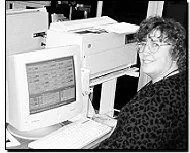
Before migrating to DPS Telecom alarm management, Frontier described their previous alarm system as antiquated. For a 24/7 center, that can translate into slower recognition of high-priority events and more effort for operators to interpret what needs immediate action.
Frontier needed monitoring that would:
Frontier implemented DPS Telecom T/Mon LNX and added T/GrafX for graphical, map-based visualization. This combination is designed for NOC environments where operators need a consolidated alarm view and a fast way to navigate from an alarm list to a site context.
Julie Kourey, who worked in Rick Herman's Network Services Group, had been working with the graphical DPS interfaces since the initial turn-up. She noted: "This system is very new and very visual--the colors make it extremely easy to spot a critical versus major or minor alarm."
In a practical operating sense, T/Mon LNX serves as the alarm collection and presentation layer for the monitoring center, while T/GrafX provides a graphical option to view sites on a map with icons. Frontier configured T/GrafX so that a controller could choose the map view when it was helpful: "Some people prefer the map," Kourey said.
For telecom teams looking to modernize a NOC display wall or operator consoles, this is a common pattern: use T/Mon LNX to manage alarm workflows and escalation, and use T/GrafX to add geographic and site-level visualization for faster recognition and triage.
Frontier's monitoring covers central offices in Minnesota, Iowa, Wisconsin, and Georgia - handling both environmental and equipment alarms. As Kourey explained, their operation depends on DPS to provide "equipment and environmental monitoring - anything that would cause [them] to need to call someone in to fix some equipment or temperature control."
For alarm centers, environmental conditions (such as temperature-related issues) can be as operationally significant as equipment faults because they often indicate problems that could lead to service impact if not addressed. Deploying DPS Telecom alarm management helps consolidate these alarm types into one operator view, reducing the need to check multiple systems.
After the changeover, Frontier reported improved monitoring and operator acceptance of the new system. Kourey said the T/Mon and T/GrafX solution was a great addition to their center and contrasted it with their previous platform: "Our old system was very antiquated. All of the feedback that I've received from the other people is that they like it also!"
The primary operational improvements Frontier highlighted were:
Frontier also reported positive experiences when contacting DPS Technical Support: "Whenever I've called them they are very available for us--they've been there everytime I've needed them."
For organizations building a similar monitoring stack, DPS Telecom's Alarm Master solutions can be configured to match how your team works, whether you prefer lists, dashboards, map views, or a combination.
When critical, major, and minor alarms are visually distinct, operators can prioritize response more quickly and reduce the chance of missing the most urgent conditions during busy periods.
Map and site-icon views help some operators understand location and site context immediately. With T/GrafX, teams can keep a traditional alarm view available while enabling a graphical option for controllers who prefer it.
Frontier monitored both equipment alarms and environmental alarms, including conditions that could require dispatch for equipment repair or temperature control.
T/Mon LNX provides alarm management for monitoring centers, while T/GrafX adds graphical visualization. Together, they support operator workflows that need both alarm prioritization and site awareness.
To learn how DPS Telecom can help your organization modernize alarm visibility and operator workflows with T/Mon LNX and graphical views, reach out for a free consultation or call 1-800-693-0351 to speak with an expert about your project.