Check out our White Paper Series!
A complete library of helpful advice and survival guides for every aspect of system monitoring and control.
1-800-693-0351
Have a specific question? Ask our team of expert engineers and get a specific answer!
Sign up for the next DPS Factory Training!
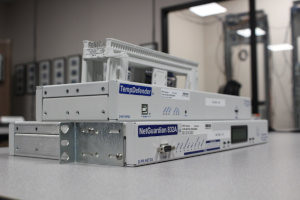
Whether you're new to our equipment or you've used it for years, DPS factory training is the best way to get more from your monitoring.
Reserve Your Seat TodayGTE Telecom, Inc. needed to move network management and alarm reporting from Indianapolis to a facility in Dallas that was reporting to an SNMP manager, despite having alarm sources in TL1, DCPF, and Teltrac formats. DPS Telecom deployed its IAM Element Manager as a protocol mediation approach to carry multiple legacy and modern alarm feeds into SNMP reporting, enabling a reliable cutover on a tight timeframe.
| Industry | Telecommunications |
|---|---|
| Company | GTE Telecom, Inc. |
| Company Type | Major network operator (OSS organization) |
| Geography / Coverage | Indianapolis OSS reporting to a Dallas facility |
| Primary Challenge | Migrate alarm and network management data to an SNMP manager while handling multiple source protocols (TL1, DCPF, Teltrac), including discontinued TelTrak remotes |
| Solution Deployed | IAM Element Manager used for protocol mediation and SNMP reporting |
| Implementation Timeframe | Tight timeframe (as stated by the OSS manager) |
| Key Result | Cutover completed with reliable operation and a reasonable price and timeframe (qualitative results stated by GTE) |
| Products Used | IAM Element Manager |
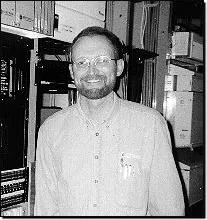
Rob Walsman, OSS manager for GTE Telecom, Inc. in Indianapolis, was responsible for ensuring that network management data and alarms could be reported to a facility in Dallas. The receiving environment reported to an SNMP manager, which made consistent SNMP output a requirement regardless of how alarms were originally generated.
GTE's alarm sources consisted of a variety of protocols, including TL1, DCPF, and Teltrac. A key concern was the presence of manufacturer discontinued TelTrak remotes. In practical terms, that meant a straightforward conversion effort could have forced a costly and disruptive replacement of existing equipment just to complete the cutover.
As Rob described it, cutover would be difficult without completely replacing the Teltrac system. He wanted a way to bring those sources forward into an SNMP-centric management workflow without losing the investment in existing remotes.
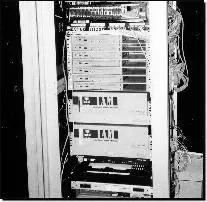
DPS Telecom provided an IAM Element Manager solution designed for protocol mediation when multiple telemetry and alarm protocols must be normalized for a management system. In this project, the goal was to take TL1, DCPF, and Teltrac sources and deliver the resulting alarms and management data to an SNMP manager in Dallas.
Rob noted that the solution came together during training at DPS Telecom, where he collaborated with DPS team members Eric Storm and Eric Bopp on how to bring the Teltrac system into the overall management view.
In general, protocol mediation solutions like the IAM are used to translate and map incoming alarm and status points from varied sources into a consistent data model, then forward them over standardized interfaces (such as SNMP) to an OSS or NMS. For telecom operators, this approach reduces the need to replace field equipment simply because a network management layer has standardized on SNMP.
When your environment includes mixed legacy protocols, DPS Telecom typically recommends using an alarm management and mediation layer to normalize data before it reaches the OSS. For many organizations, that role is filled by the T/Mon (Alarm Master) family and related mediation solutions, which are built to aggregate, correlate, and forward alarms from multiple sources and interfaces.
Rob emphasized that the work was completed under a tight timeframe. He also stated that there were occasions where extra cost was required and that it was reasonable given the constraints.
Rob specifically called out DPS installer John Maldonado for working alongside the team to ensure the project was completed, describing him as contributing like a member of the team and working as many hours as needed to get the job done.
By using the IAM Element Manager as the mediation layer, GTE was able to port network management data to Dallas and report to an SNMP manager while still accommodating TL1, DCPF, and Teltrac alarm sources, including the discontinued TelTrak remotes.
When asked if he would do it again, Rob replied, "Sure, in a heartbeat." He said there was a lot on the line, that the solution "works very reliably," and that he was looking forward to the next project.
IAM Element Manager (T/Mon family) - Used by GTE to mediate multiple protocols and report to an SNMP manager.
For similar multi-protocol OSS environments, DPS Telecom often recommends evaluating the broader T/Mon (Alarm Master) solution set to centralize alarm collection, mapping, escalation, and SNMP forwarding across diverse telecom infrastructure.
We have heard several stories over the years of how T/MonXM was used to catch bad guys, save systems from meltdowns, and do other ingenious things beyond what we had originally anticipated.
If you have a T/Mon story you would like to share with the rest of the alarm community, write us a letter.
Categories include:
If we publish your story in The Protocol, you may select one of the following gifts:
These are common engineering questions that come up when centralizing alarms from mixed telecom protocols into an SNMP-based OSS workflow.
Protocol mediation is the process of receiving alarms and status from different interfaces (such as TL1, DCPF, or proprietary telemetry formats) and translating them into a consistent output format, often SNMP, so a single management system can consume the data.
Many OSS and NMS environments standardize on SNMP traps and polling for integration. Translating TL1 to SNMP can allow legacy TL1-speaking elements to remain in service while still feeding a centralized SNMP manager.
When field remotes are discontinued, replacement parts and like-for-like upgrades can be limited. Mediation helps by preserving existing remotes while still providing modern northbound reporting to the OSS.
Teams typically document point naming conventions, severity mapping, acknowledgement behavior, and how each protocol represents state changes. This makes the translated SNMP output consistent and actionable for operators.
If you need to centralize alarms across multiple protocols, sites, or vendors, DPS Telecom solutions in the T/Mon (Alarm Master) product area are designed for alarm aggregation, mapping, and forwarding to OSS tools, including SNMP-based managers.
If you have a special application that seems insurmountable, contact DPS Telecom. We may have a surprising solution for you.
Get a free consultation or call 1-800-693-0351 to speak with a DPS Telecom expert about your own protocol mediation, SNMP integration, or alarm management project.