Check out our White Paper Series!
A complete library of helpful advice and survival guides for every aspect of system monitoring and control.
1-800-693-0351
Have a specific question? Ask our team of expert engineers and get a specific answer!
Sign up for the next DPS Factory Training!
Whether you're new to our equipment or you've used it for years, DPS factory training is the best way to get more from your monitoring.
Reserve Your Seat TodayVolt Telecom Group provides engineering, construction, maintenance, and staffing services to a worldwide telecommunications client base. In its telemetry and alarm installation work, Volt focuses on completing each site quickly while maintaining process-driven quality control. The team emphasizes advance planning so field installers can mount equipment, roll up alarms, and test within a tight on-site window.
| Industry | Telecommunications |
|---|---|
| Company | Volt Telecom Group |
| Company Type | Engineering, construction, maintenance, and staffing services provider (telecom) |
| Geography / Coverage | Worldwide client base; projects include travel across the U.S. |
| Primary Challenge | Complete multi-site telemetry and alarm installations quickly (often within a few days per site) while maintaining consistent quality and minimizing return visits. |
| Solution Deployed | Systematic, repeatable installation approach with strong pre-install data gathering (purchase orders, site diagrams, site surveys) and defined quality procedures. |
| Key Result | Typical installations planned for two to three days on-site, with quality controls emphasized throughout the rollout. |
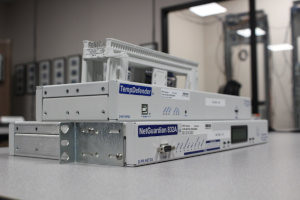
| Products Mentioned | NetGuardian RTU and T/Mon (shown in the installation example image) |
Volt Telecom Group delivers a full spectrum of services including engineering, construction, maintenance, and staffing. The company cites a deep heritage in telecom, with roots reaching back to the era of Western Electric and the Bell System.
For telemetry and alarm services, Volt emphasizes repeatable execution across many locations. That focus supports consistent results in large network rollouts where field teams must perform the same tasks - mounting hardware, wiring, integrating alarms, and validating operation - across a wide range of sites.
Multi-site alarm and telemetry deployments are won or lost on consistency. The work has to move fast enough to meet rollout schedules, but it also has to be correct the first time to avoid expensive return visits.
Volt telemetry manager Anthony Frascino describes a clear dependency: installation time improves when the team has complete and accurate information ahead of time. That preparatory information typically comes from purchase orders, site diagrams, and site surveys. In large networks, diagrams do not always match the on-site reality, so plans must be adjusted without losing schedule discipline.
In addition, Volt places quality at the center of the process. Frascino notes the need to finish quickly and on time while keeping quality high, supported by documented procedures and training.
Volt approaches telemetry and alarm installation as a staged, repeatable rollout. Alarm services engineer Chet Kowalczyk describes a practical model: for each site, the team targets two days on-site, three days maximum, to mount, install, roll up alarms, and test.
To maintain velocity across multiple locations, Volt also uses a handoff workflow: two technicians start together, then one moves to the next site while the other completes the remaining tasks at the first. This approach reduces idle time while keeping accountability for close-out testing.
Behind the on-site execution is a planning phase. Frascino states that with the necessary information in hand, the team can estimate how long the job will take based on what equipment will be installed and the time required to install it.
For organizations implementing or expanding similar alarm and telemetry programs, DPS Telecom recommends standardizing both the physical monitoring layer and the central alarm management layer:
When field teams and NOC teams agree on a repeatable point list, naming standards, and alarm escalation rules, the installation workflow becomes more predictable - which directly supports fast, high-quality site turn-ups.
Volt highlights that installation speed depends on preparation. Purchase orders, diagrams, and survey data help determine what will be installed and how long the work should take. When diagrams do not correspond to the actual site, the field team adapts the plan and proceeds.
Volt also emphasizes quality systems and training. Frascino notes that Volt has been ISO 9000 certified and was recently TL 9000 certified, with documented quality control procedures and installer training available via an internal website.
For teams standardizing remote monitoring during fast rollouts, DPS Telecom typically advises implementing a structured pre-install package for each site, including:
This kind of documentation aligns well with the goal Volt describes: get it done quickly, but get it done right so a return visit is not required.
Volt reports systematic rollouts with a tightly controlled on-site window. As Kowalczyk describes it, the team targets two days per site, with three days maximum, to mount equipment, complete installation, roll up alarms, and test.
Volt also stresses that speed does not replace quality. Quality control procedures, training, and process discipline are positioned as essential to delivering correct installations and reducing the need to revisit sites.
If you already have a mix of site equipment and need a consistent way to bring alarms into one place, DPS Telecom can help design point lists and integration methods (dry contact, analog thresholds, and network/SNMP) that support fast deployments and clean commissioning.
In telecom operations, "roll up" typically means consolidating multiple alarm points and sources at a site into a format the NOC can use - including naming, prioritization, and routing to the correct screens and escalation rules. Central systems like DPS Telecom T/Mon are commonly used to standardize that rollup.
Over time, equipment swaps, expansions, and emergency repairs can change wiring and patching without a matching documentation update. Successful rollout teams plan for this and include time for validation during commissioning.
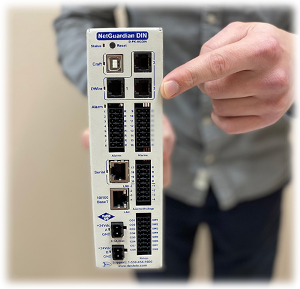
An RTU provides a consistent termination point for alarm wiring and telemetry, which simplifies testing and troubleshooting. Using a standard RTU platform (such as a NetGuardian model appropriate to the point count) can reduce variation between sites and help crews follow a repeatable checklist.
Quality is supported by documented procedures, training, and consistent acceptance tests. From a tooling perspective, consistent alarm naming and clear thresholds reduce false alarms and help the NOC validate that each site is reporting correctly before the crew moves on.
 Example of a remote site installation using NetGuardian and T/Mon.
 If you are planning a multi-site telecom rollout and need predictable installation timelines with consistent alarm presentation, DPS Telecom can help you standardize the site monitoring layer and the NOC alarm workflow. Get a Free Consultation or call 1-800-693-0351 to speak with a DPS Telecom expert about your project.