Check out our White Paper Series!
A complete library of helpful advice and survival guides for every aspect of system monitoring and control.
1-800-693-0351
Have a specific question? Ask our team of expert engineers and get a specific answer!
Sign up for the next DPS Factory Training!
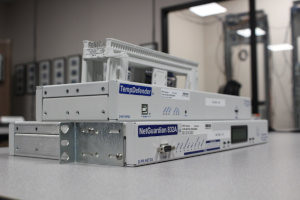
Whether you're new to our equipment or you've used it for years, DPS factory training is the best way to get more from your monitoring.
Reserve Your Seat TodayOrius Central Office Service Group provides EFI and other value-added services for telecom, utility, and government organizations that need accurate central office work under aggressive schedules. Their approach emphasizes experienced engineering, disciplined project management, and quality assurance to reduce errors while meeting stringent carrier standards.
| Industry | Telecommunications (central office and network infrastructure services) |
|---|---|
| Company Type | Professional services provider delivering EFI and related field engineering support |
| Primary Challenge | Delivering finished installations with correct materials and documentation under tight turnaround times, while meeting detailed customer standards |
| Solution Deployed | EFI plus site prewiring, testing, power supply engineering and testing, training, documentation and database/diagram updates |
| Key Result | High-quality, standards-compliant installs supported by systematic QA and project management, helping clients execute faster without material mistakes |
| Services Referenced | DPS Telecom EFI Services (as a category of service) |
The Orius Central Office Group provides EFI and other value-added services to a client base that includes telecoms, utilities, and government agencies.
"Our Central Office Group serves Verizon, Ameritech, AT&T, all the RBOCs, Cisco, Global Crossing, and other OEMs," said Tristan Longnecker, national account manager.
According to Longnecker, Orius supports end-to-end delivery details that typically determine whether a deployment goes smoothly: "We engineer finished installations, update the database, work on the diagrams. What we provide is expertise, and knowledge of both the equipment and the client. We work the marriage between their systems and their new equipment."
In addition to EFI services, Orius offers site prewiring, testing, power supply engineering and testing, and training.
Central office and network installation work often requires tight coordination of engineering, materials, documentation, and testing.
Central office work is detail-driven. Schedules can compress from weeks to days, while the acceptable margin for error remains close to zero. Longnecker described a core operational pressure: "With today's quicker turn-around times, you can't afford mistakes, especially material mistakes."
Orius also emphasized the need to stay adaptable as equipment and standards change. As Longnecker put it, "Compared to how things used to be, today we have to be much more flexible, adapt a lot more quickly. A big part of our job is keeping abreast of the technical changes."
At the same time, service organizations must control expenses while still meeting the standards of large carriers and OEMs. Longnecker noted that clients want quality while keeping cost down, and that the allotted time for assembling and executing installations can be as little as two weeks.
Orius positions its value around three pillars: deep technical expertise, strict quality assurance, and systematic project management. Longnecker summarized the differentiator as experience plus process discipline: "We have the experience - in many cases we've worked with the technology as long or longer than the manufacturer. We're TL 9000 certified."
To support consistent delivery, Orius maintains a dedicated QA audit function. Longnecker explained: "We have a quality audit group that reports directly to the president, entirely divorced from engineering and operations. They audit projects and conduct training so that everyone keeps abreast of our quality control procedures."
Operationally, Orius focuses on making sure the work plan matches the site reality. Longnecker described a hands-on approach to preventing avoidable issues: "Instead of just checking materials in the inventory, the project manager, the engineer, and the site survey technician walk through the site and identify any potential issues."
While every site differs, the execution themes in this story align with what buyers typically look for when evaluating an EFI provider for central offices and critical facilities.
This is the core reason many organizations engage an EFI provider: to reduce coordination burden and convert a complex, multi-step installation into a controlled, auditable process.
Orius targets two outcomes that are central to successful turnups: fewer avoidable mistakes and consistent compliance with customer standards. Longnecker highlighted both the pace and the accountability they aim to deliver: "We wanted to create a lean, mean, flexible machine."
In addition, Orius measures success through customer acceptance and satisfaction. Longnecker noted that large customers can be exacting: "AT&T and Cisco are very detailed on the standards we have to meet." He added that positive client feedback is a meaningful indicator that the team met those expectations: "When we get a thank you for what we've done, we feel like we've accomplished something."
This page highlights EFI and central office services. If you are planning similar work, DPS Telecom can help in two complementary ways:
These FAQs summarize common technical and operational questions that come up when planning EFI and central office work.
EFI (Equipment Furnished Installation) commonly includes engineering-led installation of customer- or vendor-furnished equipment, plus supporting tasks such as prewiring, testing, power-related work, and documentation updates. The exact scope depends on the site and the customer acceptance criteria.
When projects move from multi-week schedules to two-week windows, there is less time to correct materials issues, update records, or re-test. That makes accurate site surveys, controlled processes, and disciplined QA more important.
QA processes help ensure installations follow documented procedures, meet customer standards, and are audited consistently. Independent audits and recurring training can reduce variation across teams and projects.
Operations teams rely on correct diagrams and inventory/database records to troubleshoot quickly, plan expansions, and maintain compliance with internal standards. Documentation gaps can slow restoration during outages.
A common approach is to deploy RTU-based telemetry and centralized alarm management, so power, environmental, and equipment alarms can be routed to the right team. DPS Telecom solutions such as NetGuardian and T/Mon are designed for this type of 24/7 monitoring and escalation workflow.
If you are coordinating EFI, central office upgrades, or follow-on monitoring for a critical site, DPS Telecom can help you plan an implementation path that reduces mistakes and speeds acceptance. Get a Free Consultation or call 1-800-693-0351 to speak with a DPS Telecom expert about your project.