Check out our White Paper Series!
A complete library of helpful advice and survival guides for every aspect of system monitoring and control.
1-800-693-0351
Have a specific question? Ask our team of expert engineers and get a specific answer!
Sign up for the next DPS Factory Training!
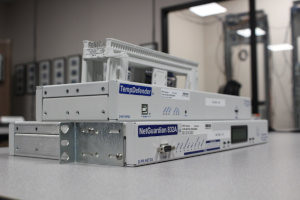
Whether you're new to our equipment or you've used it for years, DPS factory training is the best way to get more from your monitoring.
Reserve Your Seat Today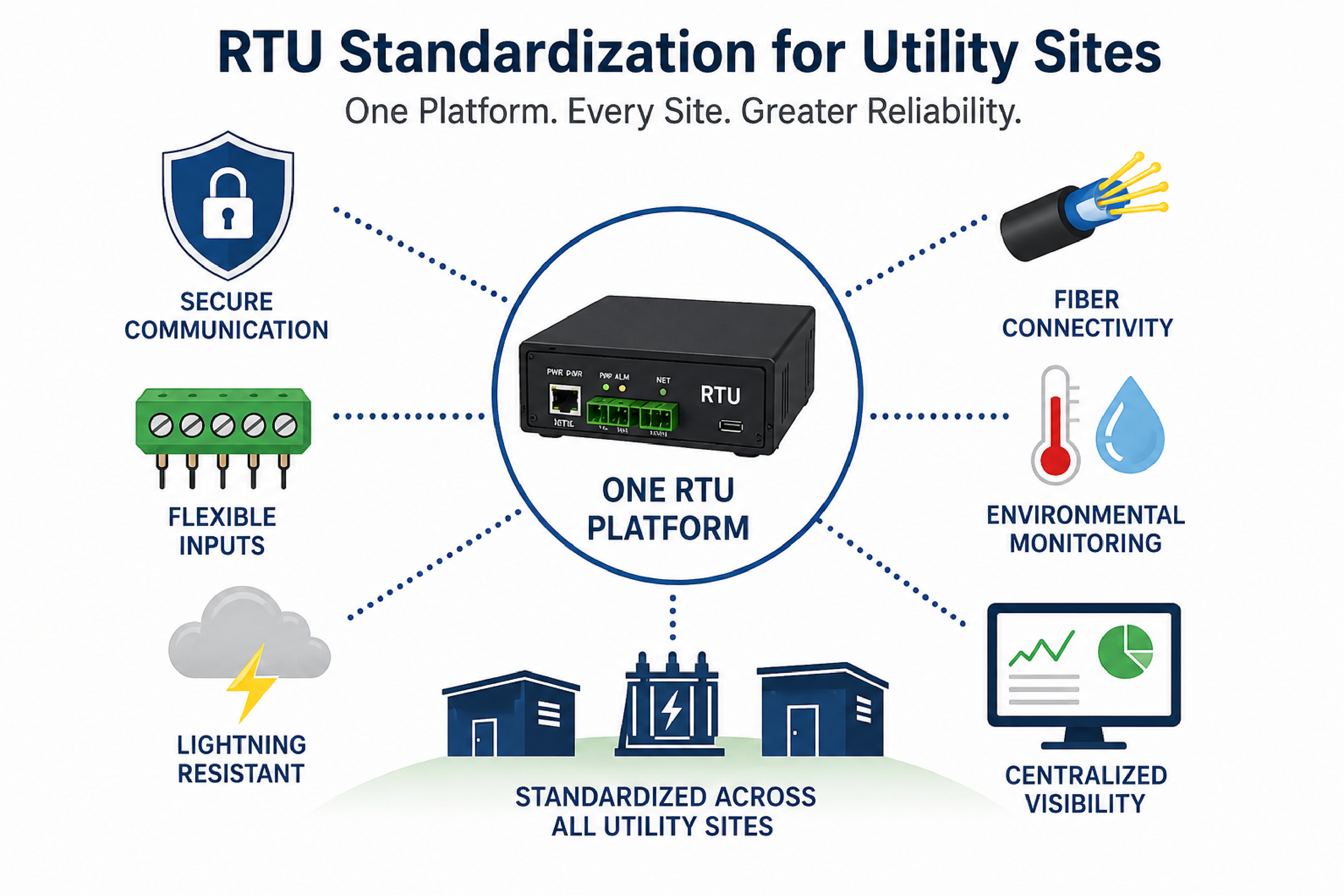
RTU standardization is the practice of selecting one remote telemetry unit platform and deploying it consistently across many sites, rather than accumulating a mix of models and vendors over time. For a utility with dozens of remote facilities, the decision is less about any single feature and more about what a common platform does for sparing, training, security posture, and the pace of future upgrades.
This article explains how a utility evaluates a fleet-wide RTU standard, why aging monitoring hardware eventually forces the question, and which technical criteria matter most: security protocol support, input flexibility, lightning resilience, transport options, and environmental sensing. It is written for telecom and substation engineering teams planning a multi-site monitoring refresh.
A monitoring refresh is the replacement of remote units that can no longer meet current security, integration, or reliability requirements. In utility networks, the trigger is rarely a single catastrophic failure. It is usually the accumulation of limitations that make an older generation of hardware untenable.
Common drivers include:
Once several of these converge, the practical question shifts from repairing a single failed unit to selecting a platform the utility can standardize on for the next decade. A structured RTU replacement evaluation is the usual next step.
SNMPv3 is the version of the Simple Network Management Protocol that adds authentication and encryption, so management traffic cannot be trivially read or spoofed. Earlier versions transmit community strings in the clear, which is increasingly unacceptable inside a utility's security boundary.
For an enterprise security team, native SNMPv3 support is often a gating requirement rather than a preference. Remote units sit on the operational network and are reachable for management, which places them squarely within the scope of internal security review. A remote unit that cannot authenticate and encrypt its management traffic becomes an exception that has to be justified, documented, and compensated for elsewhere.
Two distinctions are worth drawing during evaluation:
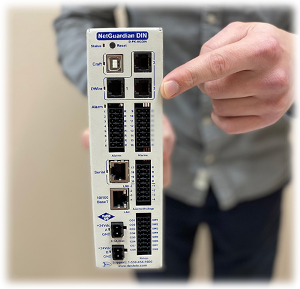
DPS Telecom documents its approach to monitoring cybersecurity, including encrypted management traffic and current standards, so the monitoring layer does not become the exception in an otherwise hardened network. Units in the NetGuardian product family are built to report securely into an enterprise SNMP manager.
A discrete input is an RTU input that senses the open or closed state of a contact. Most alarm points in a utility site are conventional dry contacts, but some modern equipment signals status with a transistor or open-collector output instead, sometimes described as a wet contact. An RTU that expects only dry contacts can misread these.
The practical solution is an RTU whose inputs can be configured to accept both types. A unit can be built with a block of standard discrete inputs for conventional dry contacts plus a set of inputs configured for transistor-style signaling, so a single RTU covers the whole site without adding interface hardware.
This matters for standardization. If the fleet standard can only handle dry contacts, every site with transistor-output equipment becomes a special case, which is exactly what a standard is supposed to eliminate. Confirming the input mix during the design phase, and building the configuration into the fleet standard, keeps one RTU model viable across a mixed equipment base. Reviewing available RTU input and output options early avoids a late redesign.
An expansion shelf is an add-on unit that increases the alarm point capacity of a base RTU without replacing it with a larger model. When most sites in a fleet are small and only a few are large, this creates a real architectural choice.
| Approach | Advantages | Tradeoffs |
|---|---|---|
| One base model everywhere, plus expansion shelves at large sites | A single RTU model to spare, configure, and train on. Technicians learn one platform. Spares cover every site. | Large sites carry an extra chassis; total point capacity is built up rather than native. |
| Small model at small sites, larger model at large sites | Higher native capacity in one box at the large sites. | Two platforms to spare, configure, document, and train on. A spare for one is not a spare for the other. |
The sparing argument usually dominates in a utility fleet. When roughly nine of ten sites use the same base unit, keeping that unit as the only spare on the shelf simplifies logistics considerably, and an expansion shelf at the handful of larger sites preserves that simplicity. The alternative introduces a second model into the sparing pool for a small minority of locations.
The right answer depends on how many large sites exist and how deep the point count runs at each. That is a decision worth modeling explicitly before the order, not after.
Optical transport uses light over glass fiber rather than electrical signaling over copper, which means it carries no conductive path between buildings or between a site and the equipment inside it. That property is the reason fiber is attractive at lightning-prone remote sites.
Copper data links provide a route for surge energy to reach equipment. A strike near the site can couple onto copper runs and damage whatever is connected at the end, including the monitoring hardware that was supposed to report the event. Fiber breaks that path, which is why utilities in high-lightning regions increasingly plan new remote site connections as optical.
Two planning points follow:
Where a site is moving to optical transport, reviewing the available fiber RTU options during specification keeps the monitoring platform aligned with the network plan rather than lagging it.
Environmental monitoring is the measurement of physical conditions at a site, such as temperature, humidity, and power quality, that predict equipment failure before an outage occurs. In humid climates, this is not a secondary concern.
Temperature alone tells an incomplete story. Sustained high humidity drives condensation, corrosion, and mold in enclosures and shelters, and it degrades equipment on a timeline that a temperature probe never reveals. Combined temperature and humidity sensor nodes give a fuller picture of the conditions that actually shorten equipment life. Distributed D-Wire sensors allow multiple sensing points to be added to an RTU on a single sensor bus, and DPS Telecom offers temperature and humidity monitoring designed for exactly this use.
Power quality is the second dimension worth capturing:
Specifying these sensors as part of the fleet standard, rather than adding them later site by site, is what makes the monitoring program consistent across the network.
Fleet standardization scoping is the process of settling the open technical questions before an order is placed, so the standard holds across every site rather than fragmenting into exceptions.
A practical checklist:
Answering these before the first purchase order is what turns a one-off replacement into a durable fleet standard.
Because the limitation is usually security and support, not immediate failure. Older units frequently lack reliable SNMPv3 and no longer receive meaningful software updates, which means security findings never close. A functioning unit on a frozen platform is still a growing liability.
Yes, when its inputs are configured for both. A unit can carry a block of standard discrete inputs for conventional dry contacts alongside inputs configured for transistor-style signaling, so a single model covers a mixed equipment base without extra interface hardware.
Often, when most sites are small. Keeping one base model everywhere means one spare, one configuration, and one platform for technicians to learn, with expansion shelves covering the few large sites. Introducing a second model adds a parallel sparing and training burden for a small minority of locations.
Fiber carries no conductive path, so it does not provide a route for surge energy to reach connected equipment the way copper data links can. That is why utilities in lightning-prone regions increasingly plan new remote site connections as optical.
Sustained humidity causes condensation, corrosion, and mold that degrade equipment on a timeline temperature alone will not reveal. In humid climates, combined temperature and humidity sensing gives a far more accurate picture of the conditions shortening equipment life.
A power-fail contact tells you commercial power dropped. Current monitoring shows whether the load is actually drawing power, which helps confirm that a generator transfer really occurred rather than assuming it did. Paired with voltage monitoring, it reveals power quality problems that damage equipment over time.
If you are evaluating a single RTU standard across dozens of remote sites, the decisions that matter most tend to surface early: native SNMPv3, inputs that handle both dry contacts and transistor outputs, a sparing strategy you can live with, a transport plan that anticipates fiber, and environmental sensing suited to your climate. DPS Telecom can review your site list, confirm interface and capacity options, and help you build a standard configuration that holds across the fleet. Get a Free Consultation, or call 1-800-693-0351 or email sales@dpstele.com to discuss your monitoring standard.

Andrew Erickson
Andrew Erickson is an Application Engineer at DPS Telecom, a manufacturer of semi-custom remote alarm monitoring systems based in Fresno, California. Andrew brings more than 19 years of experience building site monitoring solutions, developing intuitive user interfaces and documentation, and opt...