Check out our White Paper Series!
A complete library of helpful advice and survival guides for every aspect of system monitoring and control.
1-800-693-0351
Have a specific question? Ask our team of expert engineers and get a specific answer!
Sign up for the next DPS Factory Training!
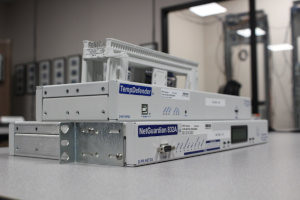
Whether you're new to our equipment or you've used it for years, DPS factory training is the best way to get more from your monitoring.
Reserve Your Seat Today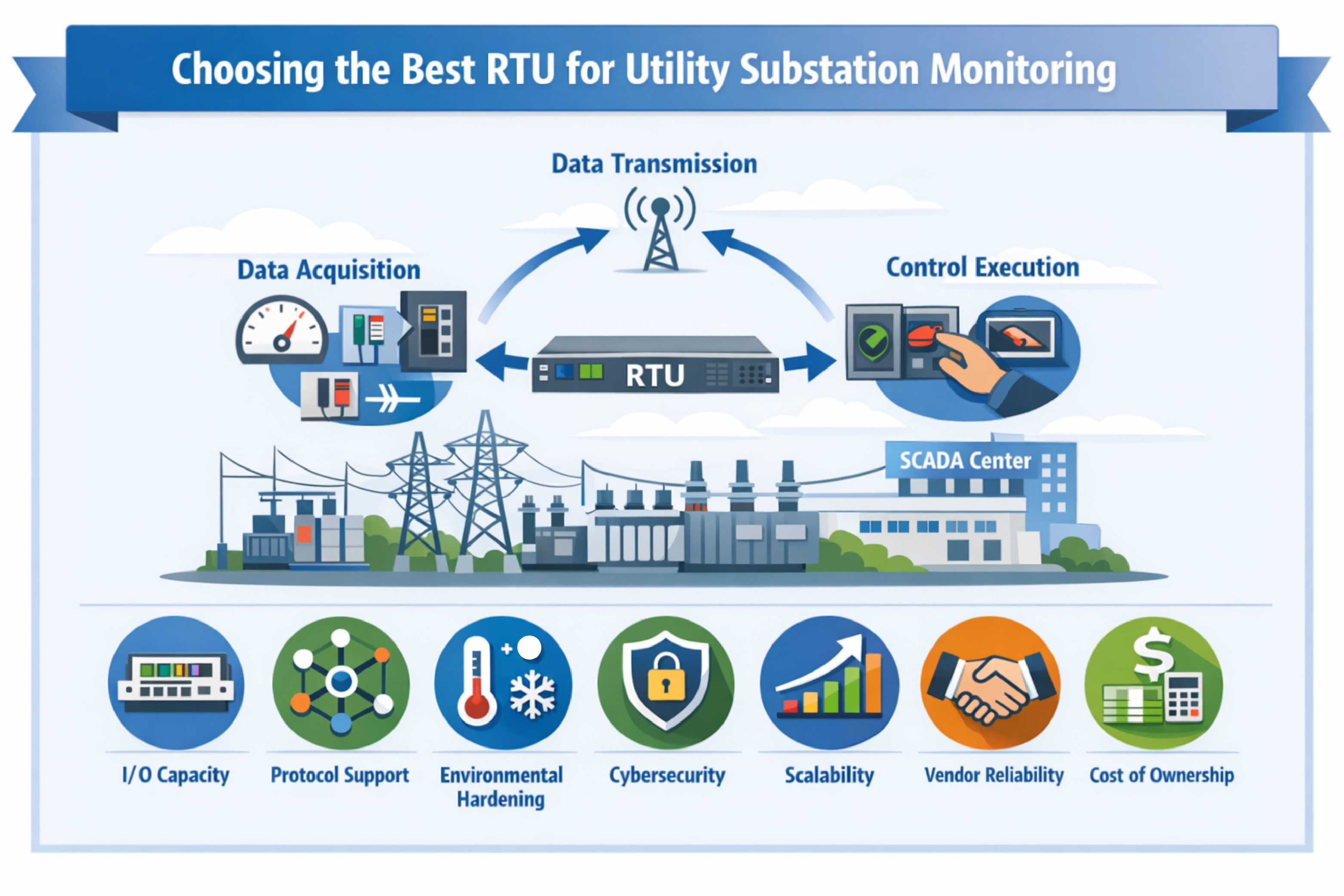
Choosing an RTU for utility substation monitoring is one of those decisions that looks straightforward on the surface but has a way of compounding over time. Get it right and you have reliable visibility into your grid equipment for the next 15 or more years. Miss a key requirement and you may be dealing with regulatory exposure, costly truck rolls, or a complete visibility gap at a critical site.
There are seven factors that consistently determine whether a substation RTU selection succeeds or creates problems down the road: I/O capacity, protocol support, environmental hardening, cybersecurity, scalability, vendor reliability, and total cost of ownership. This guide walks through each one in practical terms.
At DPS Telecom, we've been manufacturing RTUs and network monitoring equipment since 1986, with more than 172,000 devices deployed across utility, telecom, government, and infrastructure networks worldwide. We've seen what works at scale. This guide covers what you need to evaluate when choosing an RTU for substation environments, whether or not you end up working with us.
Before getting into selection criteria, it helps to be clear about what an RTU is and isn't doing in a substation context.
A Remote Terminal Unit (RTU) is a microprocessor-based device that interfaces with sensors and field equipment at a remote site, collects data, and transmits it to a central SCADA system. Inside a substation, it handles three core functions: data acquisition (monitoring analog values like voltage, current, and temperature, along with digital status points like breaker position and door switches), data transmission (reporting conditions upstream to the SCADA master), and control execution (carrying out commands from the control center, such as opening circuit breakers or activating generators).
People often ask how RTUs differ from PLCs and IEDs. The short answer is that they're designed for different problems. While a PLC is built for localized control with relatively limited I/O, an RTU is purpose-built for remote, unmanned environments with 30+ inputs, multiple outputs, and the communication interface support to report back to a distant master. IEDs like protective relays are device-specific controllers. An RTU acts as the general-purpose data concentrator that aggregates information from multiple IEDs, sensors, and field devices into a single upstream feed.
That distinction matters because over 75,000 substations across the U.S. are unmanned. The RTU is often the only thing standing between your operations center and a complete visibility blackout at a remote site.
I/O capacity is the most fundamental sizing decision you'll make. Every substation has a specific set of data points that need monitoring, and the RTU has to accommodate all of them with room to grow.
The three primary I/O types you'll be working with are:
Here's how requirements typically scale with substation size:
| Substation Type | Discrete Inputs | Analog Inputs | Control Relays | Typical RTU Cost |
|---|---|---|---|---|
| Small (distribution) | 2-16 | 2-4 | 1-2 | $700-$1,500 |
| Medium | 16-64 | 4-8 | 2-8 | $1,500-$3,000 |
| Large (transmission) | 64-176+ | 8-16+ | 8+ | $3,000-$5,000+ |
One thing we recommend: order at least 20% more capacity than you need today. Quality RTUs routinely operate for 15 years or more, and the cost of replacing an undersized unit mid-lifecycle, including the truck roll, engineering time, and any monitoring gaps, far exceeds the upfront cost of getting the right-sized unit from the start. Substations also tend to grow over time as equipment is upgraded or added.
Real-world substations rarely run on a single protocol. A substation RTU needs to handle upstream SCADA communication, downstream device integration, and IT/network management simultaneously. Here's a breakdown of the protocols you're likely to encounter:
| Protocol | Primary Use | Transport | Unsolicited Reporting | Built-in Security | Geographic Prevalence |
|---|---|---|---|---|---|
| DNP3 (IEEE 1815) | SCADA master-to-RTU | Serial + TCP/UDP | Yes | SA-v5, TLS | North America (dominant) |
| IEC 61850 | Intra-substation automation | Ethernet (MMS/GOOSE) | Yes | IEC 62351 | Global (growing) |
| Modbus RTU/TCP | Device-level data exchange | Serial + TCP | No | None built-in | Universal |
| IEC 60870-5-101/104 | Telecontrol (SCADA) | Serial/TCP | Yes | IEC 62351 extensions | Europe, Asia |
| SNMP (v1/v2c/v3) | Network device monitoring | UDP/TCP | Yes (traps) | SNMPv3 encryption | Universal |
DNP3 is the baseline for North American utility deployments. Standardized as IEEE 1815-2012, it was designed specifically for reliable communication in adverse utility environments, with event-driven reporting, event buffering, time synchronization, and support for up to 65,535 devices per network. For most North American substations, DNP3 support isn't optional.
IEC 61850 is the modern substation automation standard, built around replacing hard-wired connections with digital communication. Its GOOSE messaging delivers peer-to-peer communication between IEDs with latency under 4 milliseconds, fast enough for protection functions. IEC 61850-3 also sets environmental requirements for the hardware itself, so it's both a communication and a hardware standard.
Modbus remains essential for connecting power meters, VFDs, sensors, and other field devices. It lacks built-in timestamps and unsolicited reporting, but its near-universal adoption among substation field devices means you'll almost certainly need it regardless of what else your RTU supports.
SNMP plays a complementary role, monitoring the IT infrastructure inside your substation: routers, switches, firewalls, and UPS systems. SNMPv3 adds encryption and authentication. It's also required for NERC CIP compliance related to network monitoring.
Our NetGuardian RTUs support DNP3, Modbus, SNMP v1/v2c/v3, and DPS proprietary protocols. The T/Mon LNX master station handles 35+ protocols for sites with mixed or older equipment, so you're not forced into a forklift upgrade just because a legacy device doesn't speak a modern protocol.
Substations are hard on electronics. High-voltage transmission sites can operate at 500kV or higher, generating electromagnetic fields that extend over 300 meters. Tall metal structures in remote locations attract lightning, and copper-based communication links act as conduits for voltage surges. Temperature swings from -40°C in winter to 70°C or more inside an equipment cabinet on a summer afternoon are not unusual.
Commercial-grade equipment may look cost-effective at procurement, but it can struggle under these conditions. Long-term maintenance, repair, and replacement costs at remote substations can easily offset any upfront savings on cheaper hardware.
The two governing standards for substation electronics are IEEE 1613 (U.S.) and IEC 61850-3 (global). Equipment meeting these standards is designed for these conditions and will have a longer service life. Compliance with IEC 61850-3 is effectively mandatory for hardware installed in a substation environment.
| Environmental Factor | Requirement | Governing Standard |
|---|---|---|
| Temperature range | -40°C to +70/75°C, fanless | IEEE 1613, IEC 61850-3 |
| Humidity | Up to 95% RH non-condensing | IEC 61850-3 |
| EMI/EMC immunity | Power station levels | IEC 61000-6-5 |
| Surge withstand | 2-4 kV line-to-earth | IEC 61000-4-5, IEEE C37.90.1 |
| ESD immunity | Per IEC 61000-4-2 | IEEE C37.90.3 |
| Shock/vibration | 15G shock, 5-500 MHz vibration | IEC 61850-3 |
| Power redundancy | Dual independent feeds required | IEEE 1613 |
Two requirements here deserve special attention. First, fanless design: both IEEE 1613 and IEC 61850-3 specify that equipment must operate at full temperature ratings without cooling fans. Fans are a primary failure point in electronics, and if your RTU requires active cooling to survive a hot substation cabinet, you've introduced a maintenance dependency that will eventually cost you. Second, dual redundant power feeds: power supplies are among the most failure-prone components in substation electronics, and an RTU with a single power feed is a single point of failure by definition.
We recommend specifying RTUs with support for multiple input voltage options (-48VDC, +24VDC, 110/220VAC) to accommodate different substation power configurations and support battery backup where needed.
Cyberattacks targeting utility operational technology have increased significantly. CISA has documented a growing volume of attacks on ICS and OT infrastructure across critical infrastructure sectors, with the energy sector consistently among the most targeted. The 2015 and 2016 Ukraine grid attacks showed concretely what a targeted operation against substation equipment can accomplish, taking down portions of a national grid through deliberate exploitation of monitoring and control systems.
For substations connected to the Bulk Electric System, NERC CIP standards create binding cybersecurity obligations. The standards most directly affecting RTU selection are:
NERC CIP violations can carry fines up to $1 million per violation per day, which makes compliance a financial risk as much as an operational one.
When evaluating an RTU for NERC CIP compliance, verify support for:
The NetGuardian 832A G6 supports HTTPS with TLS v1.2, SNMPv3, RADIUS authentication, and up to 8 configurable users with unique permission sets. DNP3 Secure Authentication v5 is available as a build option for substations that require protocol-level authentication.
RTUs deployed today will likely still be in service well into the 2030s. The grid is changing rapidly: federal investment through the DOE's GRIP program has allocated $10.5 billion across 105 grid modernization projects in all 50 states, and IEC 61850 adoption is accelerating as older substations are upgraded. An RTU that can't adapt to this environment will create upgrade pressure much sooner than the hardware itself wears out.
Key questions to ask any vendor on scalability:
The NetGuardian 832A G6 starts at 32 discrete alarm inputs and expands to 176 via expansion units, all managed within a single 1U form factor. Paired with the T/Mon LNX master station, which handles 35+ inbound protocols and aggregates alarms from up to 9,999 devices, the architecture can grow from a handful of sites to thousands without requiring a platform change.
Technical specifications get the most attention in evaluation processes, but vendor reliability over a 15-year product lifecycle matters just as much. A few factors worth pressing on:
DPS Telecom has been building RTUs since 1986 and manufactures all products in-house in Fresno, California. Enterprise-scale deployments at major utilities, including Southern Company and Dominion Energy, span 1,000+ locations. The NetGuardian line has been in continuous production for over two decades.
The right NetGuardian model depends on your substation's I/O requirements, communication infrastructure, and protocol environment. Here's how the lineup breaks down:
| Model | Discrete Inputs | Analog Inputs | Control Relays | Key Differentiator |
|---|---|---|---|---|
| NetGuardian 832A G6 | 32 (expandable to 176) | 8 | 8 | Flagship; SNMPv3, Modbus, DNP3 option |
| NetGuardian 420 | 20 | 6 | 4 | Dedicated DNP3 variant; medium capacity |
| NetGuardian 216 G6 | 16 | 2 | 2 | Compact, economical; multiple transport options |
| NetGuardian 480 G4 | 80 | D-Wire option | 4 | Highest discrete density; lowest cost per alarm |
| NetGuardian DIN | Configurable | Configurable | Configurable | DIN-rail mount; PoE option; fits NEMA enclosures |
The NetGuardian 832A G6 is the right fit for large transmission substations that need broad I/O capacity, multi-protocol support, and room to expand. Dual NICs, optional fiber SFP ports, dual fused power feeds, and RADIUS authentication address most substation hardening and security requirements in a single 1U unit.
The NetGuardian 420 works well for medium-capacity substations with a confirmed DNP3 SCADA integration requirement. Its dedicated DNP3 variant is field-tested for direct SCADA master communication.
The NetGuardian 216 G6 covers small-to-medium distribution sites at an economical price point. The 216T variant adds T1/FrameRelay transport for sites without LAN connectivity, and the 216F includes dual SFP fiber interfaces with SNMPv3 support.
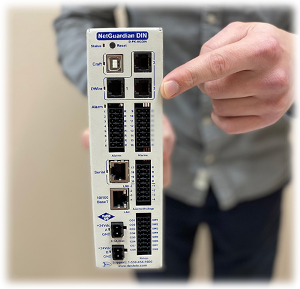
The NetGuardian DIN installs on DIN rail in small enclosures and outdoor NEMA cabinets. An optional Power over Ethernet (PoE) configuration makes it practical for sites where running separate power to a monitoring device isn't feasible.
An RTU is purpose-built for remote, harsh environments with 30+ I/O points and broad communication interface support, designed to report to a distant SCADA master. A PLC is typically used for localized control with more limited I/O and is better suited for on-site automation logic than remote monitoring over long distances.
DNP3 is the dominant SCADA protocol for North American utility deployments and is effectively a requirement for substations that report to a central SCADA master. IEC 61850 is increasingly required for modern substation automation and protection functions, and Modbus is widely needed for field device integration.
RTUs deployed in utility substations should comply with IEEE 1613 (U.S.) and IEC 61850-3 (global), which set requirements for temperature operation from -40°C to +75°C, EMI immunity, surge withstand, shock and vibration resistance, and humidity tolerance. Both standards also specify fanless operation as a design requirement.
Plan for at least 20% more I/O capacity than your current requirements, since quality RTUs regularly remain in service for 15 years or more and substations tend to add monitoring points as equipment is upgraded or expanded. Undersizing at procurement is one of the more avoidable long-term costs in substation monitoring.
The most directly applicable standards are CIP-005 (Electronic Security Perimeter segmentation), CIP-007 (port management, patch management, and access control), and CIP-015 (internal network traffic monitoring, effective October 2028). RTUs should support TLS encryption, SNMPv3, RADIUS authentication, role-based access control, and audit logging to meet these requirements.
Beyond the unit cost itself, truck rolls to remote substation sites, engineering time, reconfiguration, and any monitoring gaps during a replacement add up quickly. Repairing a substation following an undetected equipment failure can run into the hundreds of thousands of dollars, with that figure multiplying across a large network of sites.
If you're working through RTU selection for a substation deployment and want to talk through your specific I/O requirements, protocol environment, or NERC CIP considerations, contact our engineering team at DPS Telecom. We're happy to walk through how the NetGuardian line would fit your site requirements, or help you think through a configuration you're not sure about.

Andrew Erickson
Andrew Erickson is an Application Engineer at DPS Telecom, a manufacturer of semi-custom remote alarm monitoring systems based in Fresno, California. Andrew brings more than 19 years of experience building site monitoring solutions, developing intuitive user interfaces and documentation, and opt...