Check out our White Paper Series!
A complete library of helpful advice and survival guides for every aspect of system monitoring and control.
1-800-693-0351
Have a specific question? Ask our team of expert engineers and get a specific answer!
Sign up for the next DPS Factory Training!
Whether you're new to our equipment or you've used it for years, DPS factory training is the best way to get more from your monitoring.
Reserve Your Seat TodayWe'll be honest with you: choosing a multiprotocol RTU isn't about finding the unit with the longest spec sheet. After helping over 1,500 organizations integrate decades-old equipment with modern networks here at DPS Telecom, we've learned it comes down to three things that actually matter: whether the RTU can translate the specific protocols you need, whether it can survive where you need to put it, and whether it can secure devices that were built when "network security" meant a locked door.
If you're reading this, you may have some equipment from the 1980s or 90s that still works perfectly well, speaking protocols like TBOS or E2A (or one of any number of other older technologies that you are obligated to keep running). And you probably have a modern SNMP management system that has no idea what to do with that traffic. The gap between those two realities is where a good multiprotocol RTU proves its worth.

Every network we've walked through has equipment installed across different decades. That Bell System gear from 1987? Still running. That Modbus RTU controller? Not going anywhere. When your modern monitoring system can't understand what they're saying, you've got blind spots. And blind spots turn into outages you never saw coming.
The numbers tell the story. A single hour of unplanned downtime typically costs mid-sized companies around $300,000. For telecommunications providers, that figure can hit $11,000 per minute per server. When you add it up and realize most of these outages could have been prevented with proper monitoring giving you early warning, the math on a good RTU stops being theoretical.
Here's where most people get lost in the technical weeds, so let us simplify it. Some RTUs just pass data through without really translating anything. Those won't help you. What you need is comprehensive protocol mediation. That means the RTU actually understands what's coming in from your legacy gear, converts it into a normalized database internally, and outputs it in whatever format your management system expects.
Think of it like this: on one side, you've got serial connections running TABS. On the other, you need clean SNMP traps. The RTU handles all the messy translation work in between so neither side has to know the other exists.
In real deployments, here's what we see most often:
Serial connections handle the basics. RS-232 works for short distances (up to 50 feet). RS-485 handles multi-device networks across longer runs (up to 4,000 feet). Most industrial equipment speaks Modbus RTU.
Legacy telecom protocols include TBOS (Telemetry Byte Oriented Serial), TABS (Telemetry Asynchronous Block Serial), and E2A for Bell System equipment. If you're in telecommunications, you've probably got at least one of these lurking somewhere in your infrastructure.
Modern protocols are what your management systems expect: SNMP (ideally v3 for security), DNP3 in SCADA environments, and Modbus TCP for industrial networks.
Our NetGuardian series supports over 25 different protocols. We learned early on that protocol diversity matters more than having every possible feature. Incompatible equipment is useless equipment, no matter how many features it claims to have.
RTUs end up in places nobody wants to visit. Outdoor cabinets in the desert. Equipment rooms in the basement. Unmanned sites where the nearest technician is an hour away on a good day. When one fails, you lose visibility into an entire site until someone can physically get there to fix it. That's why carrier-grade specifications aren't optional.
Your RTU needs to operate from -40°C to +75°C without breaking a sweat. This covers outdoor installations from Minnesota winters to Arizona desert heat. Consumer-grade equipment taps out between 0°C and +50°C, which sounds fine until you're explaining to management why the monitoring failed during the heat wave everyone predicted three days in advance.
Look for dual power feeds with separate A and B fuses. When one power circuit fails (not if, when), your RTU keeps running. The alternative is explaining why your entire monitoring system went dark because of a single breaker.
Metal chassis matters. It provides real EMI shielding when you're sitting near radio transmitters or high-voltage equipment. Plastic housings are cheaper, but they're not doing you any favors in electrically noisy environments. I've seen the difference firsthand.
Here's how these specs compare:
| Feature | Carrier-Grade | Consumer Grade |
|---|---|---|
| Operating Temperature | -40°C to +75°C | 0°C to +50°C |
| Power Redundancy | Dual feeds with separate fuses | Single power input |
| Chassis Material | Metal with EMI shielding | Plastic housing |
| Expected Lifespan | 20+ years | 5-7 years |
We build all our NetGuardians to carrier-grade specifications. We've seen what happens when monitoring equipment fails in the field. The equipment you're monitoring might have problems. Your monitoring system never should.
Legacy protocols were designed when "network security" meant a locked door. They don't have encryption. They don't have authentication. Connecting them directly to IP networks is asking for trouble. Your RTU has to provide the security layer that legacy equipment lacks.
SNMPv3 provides encryption and message integrity for telemetry data. Earlier SNMP versions transmit community strings in plain text, which is about as secure as putting your password on a sticky note attached to the monitor.
TLS 1.2 or 1.3 secures the web configuration interface. Without it, anyone who can reach the device can modify your monitoring configuration. I've seen this happen.
SSH ensures secure remote console access. If a vendor only offers Telnet, that's your signal to walk away. Telnet transmits everything in plain text, including passwords.
User access controls with individual accounts and detailed audit logs. Shared passwords make it impossible to track who changed what, which becomes a real problem when something breaks at 2 AM and you're trying to figure out what happened.
If you work with government agencies or defense contractors, you need TAA-compliant, US-manufactured equipment. The Trade Agreements Act and Section 889 of the NDAA restrict procurement of telecommunications equipment from certain manufacturers.
For telecommunications networks, NEBS (Network Equipment-Building System) compliance ensures your equipment can withstand the same environmental stress, electromagnetic compatibility, and safety requirements as carrier-grade switching equipment. It's not just a nice-to-have.
All DPS equipment is designed and manufactured at our Fresno, California facilities, which makes it TAA and NDAA compliant. As government agencies keep tightening supply chain security requirements, US manufacturing addresses these concerns before they become deal-breakers.
Different RTU models offer different I/O capacities. You need enough inputs to monitor everything critical without paying for capacity you'll never use.
Discrete alarm inputs monitor simple on/off states: door contacts, generator status, equipment alarms. Most remote sites need between 16 and 64 discrete inputs.
Analog inputs measure continuous variables like temperature, battery voltage, or fuel levels. Sites typically need 4 to 8 analog inputs.
Control relays let you remotely control equipment like HVAC systems or perform server restarts. Having 4 to 8 control outputs provides flexibility without unnecessary complexity.
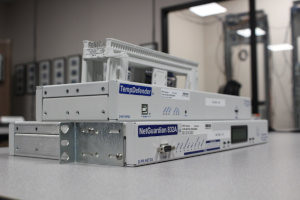
The NetGuardian 832A provides 32 discrete inputs, 8 analog inputs, and 8 control relays in a single rack unit. For larger sites, the NetGuardian 864A doubles the discrete capacity to 64 points in the same form factor. This high-density approach reduces rack space and power consumption compared to deploying multiple smaller units.
Sometimes you need support for a proprietary protocol that isn't standard. This is where vendor flexibility matters.
At DPS, we develop custom protocol support when clients need it. Our T/Mon master station currently supports 30+ protocols specifically because clients needed them at various times. We're willing to develop new protocol support when it solves your problem.
If you need a protocol we don't currently support, tell us what you're trying to accomplish. We'll work with you to determine the best approach. That might be custom development, using an existing protocol translator, or finding an alternative integration method.
Several manufacturers offer multiprotocol RTUs. Each takes a different design philosophy.
Some RTUs use modular, card-based designs where you add I/O cards as needed. Others provide fixed I/O capacity in a single integrated unit.
Card-based systems allow flexible configuration and may require additional planning for inventory and replacement scenarios. Fixed-capacity units provide known capabilities and may simplify deployment for standardized sites. Neither is inherently better. It depends on your specific situation.
RTUs typically use either menu-driven web interfaces or script-based programming. Menu-driven systems emphasize standardization and let technicians configure them without programming skills. Script-based platforms can be well suited to highly customized industrial automation and may require specialized expertise.
Our NetGuardians use menu-driven web configuration. You don't need to write code to set alarm thresholds or configure protocol settings. This works well for telecommunications and utility networks where multiple technicians need to manage equipment without becoming programmers first.
Consider how vendors approach custom requirements. Some manufacturers only sell standard catalog items. Others will modify products to meet specific needs.
We offer custom engineering for unique requirements. Our process includes creating virtual prototypes, refining specifications, and delivering field trial units within approximately 2 months. When your order reaches about 11 units, we don't charge non-recurring engineering fees. This custom capability has helped clients integrate equipment that would otherwise remain unmonitored.
The purchase price is just the starting point. Here are the costs that add up over time:
Installation and configuration labor typically runs 10-20% of hardware cost. RTUs with clear documentation and intuitive interfaces reduce these costs.
Truck rolls cost between $500 and $2,000 every time a technician drives to a remote site. RTUs with terminal server capabilities allow remote troubleshooting and configuration, which dramatically cuts these expenses.
Training requirements vary based on system complexity. Simple, intuitive interfaces reduce the time needed to train staff.
Energy consumption represents approximately 70% of lifetime total cost of ownership for always-on monitoring equipment. Efficient RTUs with intelligent power management reduce these ongoing costs.
| Cost Category | Typical Impact | Mitigation Strategy |
|---|---|---|
| Hardware Purchase | $700 - $5,000 per unit | Choose appropriate capacity |
| Installation | 10-20% of hardware cost | Select units with clear documentation |
| Truck Rolls | $500 - $2,000 per incident | Use remote management features |
| Energy | 70% of lifetime cost | Select efficient models |
| Downtime Prevention | Potentially millions in savings | Invest in reliable monitoring |
Start by creating a comprehensive inventory of equipment at your sites. Document which devices need monitoring and which protocols they use. This reveals your actual protocol mediation requirements.
Next, assess your environmental conditions. Will RTUs be installed outdoors? In climate-controlled rooms? Near radio transmitters? These factors determine which carrier-grade specifications you need.
Consider your security and compliance requirements. Government work requires TAA compliance. Critical infrastructure operators need robust security features. Corporate IT departments may have specific requirements around authentication and encryption.
Finally, evaluate vendor support capabilities. You need responsive technical support when issues arise. Direct access to engineers who designed your equipment solves problems faster than call centers reading from scripts.
At DPS Telecom, we provide 24/7 technical support with direct access to our engineering team. When you call, you speak with someone who understands how your specific equipment works. This support is included with every purchase, because monitoring systems need to work when emergencies happen.
Deploy in phases rather than attempting to replace everything at once. Start with a pilot site where you can work through configuration details. Verify integration before scaling to your entire network.
Document your configuration thoroughly. Future technicians need to understand how systems are configured. Good documentation prevents mistakes and speeds troubleshooting when problems arise at 2 AM.
Plan for future expansion. Your network will grow. Select RTUs and master stations that can scale as you add sites. The T/Mon master station can aggregate up to 1 million alarm points from diverse equipment, which gives you room to grow without starting over.
Choosing the right multiprotocol RTU determines whether legacy equipment becomes integrated into your modern management system or remains a blind spot waiting to cause problems. The right choice provides decades of reliable service with minimal ongoing costs.
I'm happy to discuss your specific requirements and help you determine which approach makes sense for your infrastructure. Our application engineers can evaluate your equipment inventory, protocol requirements, and environmental conditions to recommend appropriate solutions.
Contact DPS Telecom to schedule a consultation with one of our application engineers. We'll review your legacy integration requirements and explain how different RTU configurations would work in your environment. There's no obligation. You'll leave with a clearer understanding of your options regardless of which vendor you ultimately choose.

Andrew Erickson
Andrew Erickson is an Application Engineer at DPS Telecom, a manufacturer of semi-custom remote alarm monitoring systems based in Fresno, California. Andrew brings more than 19 years of experience building site monitoring solutions, developing intuitive user interfaces and documentation, and opt...