A high-quality building access system will enhance the security of your sites.
This guide to will show you how to ensure the safety of your revenue-generating equipment.
1-800-693-0351
Have a specific question? Ask our team of expert engineers and get a specific answer!
Sign up for the next DPS Factory Training!
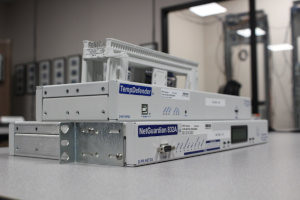
Whether you're new to our equipment or you've used it for years, DPS factory training is the best way to get more from your monitoring.
Reserve Your Seat Today
Axia operates the Alberta SuperNet and needed consistent, detailed visibility into remote sites while also controlling who could enter those sites. To support a connectivity guarantee across a province-wide IP network, Axia deployed DPS Telecom NetGuardian RTUs and an IAM Alarm Master to centralize alarms, integrate with SNMP tools, and extend monitoring into building access control.
| Industry | Broadband telecommunications and IP network operations |
|---|---|
| Company | Axia |
| Network | Alberta SuperNet |
| Geography / Coverage | Province-wide network across Alberta, Canada - connecting 429 communities and providing direct connectivity to more than 4,200 facilities |
| Primary Challenge | Deliver guaranteed connectivity by improving alarm visibility across a large footprint while also controlling and auditing physical access to remote POP sites |
| Solution Deployed | Fleet deployment of NetGuardian RTUs for environmental and equipment alarming and remote control, integrated to an IAM Alarm Master for centralized viewing and SNMP trap mediation |
| Key Result | Centralized alarms on a single screen, improved visibility for uptime assurance, reduced costly "windshield time" via remote switching, and detailed user-level access logging |
| Products Used | NetGuardian RTUs; IAM Alarm Master |
Axia is an "operator of operators," providing broadband connectivity to service providers and provincial government customers throughout urban and rural Alberta, Canada. Axia designed and operates the Alberta SuperNet, a broadband superhighway that stretches across the province.
Using this state-of-the-art IP network, Axia connects 429 communities and provides direct, high-speed connectivity to more than 4,200 government, learning, health, library, and municipal facilities. With a footprint at this scale, centralized network visibility and consistent remote-site practices are operational requirements, not just conveniences.
Axia differentiates by delivering guaranteed levels of connectivity. Meeting that guarantee requires strong alarm visibility and fast response, even when the network includes a wide mix of remote locations and equipment types.
Jim Cann, a Network Provisioning Analyst at Axia, needed a monitoring approach that covered two related needs:
Axia also needed monitoring equipment that could withstand harsh physical conditions. As Cann noted, "Our most Northern sites can get as cold as 46 degrees below zero... Celsius! Generally, equipment does not do well at those temperatures."
To meet the combined requirements of uptime visibility, protocol integration, remote control, and site security, Axia deployed DPS Telecom solutions across the SuperNet footprint:
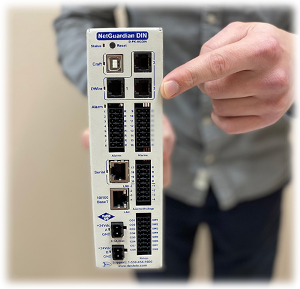
DPS Telecom NetGuardian RTUs are designed for remote telemetry and alarm collection in network environments. In typical deployments like Axia's, a NetGuardian can gather:
For Axia, the industrial temperature ratings of NetGuardian RTUs were also an important fit for remote locations exposed to extreme Alberta conditions.
Cann summarized his experience with DPS Telecom support positively: "It's been a very positive experience..."
Axia integrated their monitoring approach into their Network Operations Centre workflows. DPS technicians traveled to Axia's Network Operations Centre to assist with the IAM deployment.

As Cann described it: "When we initially got the IAM system, they came out and helped us set up the unit and taught us how to use it."
This type of assisted deployment is often important in alarm management projects because success depends on more than installing hardware. Alarm points must be mapped correctly, escalation and notification practices must match operational procedures, and the NOC must be able to interpret alarms quickly and consistently.
With NetGuardian RTUs and the IAM Alarm Master in place, Axia improved how they see and act on field conditions across the Alberta SuperNet.
With the IAM master, Cann is able to bring in alarms from Axia sites and view them on a single screen. The IAM also mediates alarms from various protocols as SNMP traps to Axia's SNMP manager. This is a practical benefit for NOC operations, because it helps unify visibility across diverse equipment while still feeding the alarm information into the systems engineers already use.
Remote control of equipment helped Axia reduce costly site visits. Cann explained: "In several cases, we've used NetGuardians to switch our wireless gear over to protection mode without having to send somebody to the site."
He continued: "In the event of a radio failing on our primary path, we are able to switch them over to the protection path remotely before we lose connectivity."
This type of remote switching is a common reason network operators deploy RTUs. When appropriately engineered, control outputs can let the NOC take corrective action quickly while field teams prioritize the most urgent dispatches.
Cann also used NetGuardian devices for more than troubleshooting communication losses and fiber cuts. With the integrated DPS Building Access System, Cann leveraged the IAM and NetGuardians to control access to Axia POP sites, supporting the security of mission-critical equipment.
Axia's system provides individual code access on a POP site basis. Cann said, "We've developed a tiered access system with users assigned to groups and groups assigned to companies."
He added: "If we have technicians that contract out to more than one of our service providers or broadband users, they can gain access based on which sites their service providers can access."
Because many organizations may require access to SuperNet sites, individualized access permissions are operationally important. The DPS Building Access System supports user-level access control so that, as Cann described, "Everyone has their own code... It's worked really well for us."
Because each technician has a unique access code, Axia's building access logs provide fine-grained traceability. Cann explained: "We know who went in, where they went in, what time they went in, and what time they went out."
He continued: "We track that directly, so we can call somebody if a tech leaves a site and something is broken. We can recall that technician back to the site right away."
In many network operations environments, this combination of alarm history plus access history helps speed troubleshooting and reduces time-to-isolation for incidents that involve physical site work.
Cann emphasized the importance of the support behind the monitoring system: "They're always there, and they're always good about helping us."
Overall, Axia's investment in advanced alarm monitoring and building access control plays a part in upholding their connectivity level guarantee. As Cann put it: "I'm happy with the NetGuardians. They've saved us an immense amount of windshield time..."
In distributed networks, many incidents start or end with a site visit. Integrating access control with monitoring helps teams correlate alarms with access events and ensures only authorized personnel can enter POPs and huts.
An RTU such as a NetGuardian can report detailed alarms (including environmental conditions) and, when engineered for the use case, provide remote control outputs. This lets the NOC take corrective actions and avoid unnecessary dispatches.
Many networks standardize on SNMP managers. An alarm master can consolidate alarms from multiple sources and forward them as SNMP traps so teams can keep using their existing SNMP workflows while improving field visibility.
Temperature ratings, enclosure choices, sensor selection, and reliable alarming are key. Axia highlighted very low temperatures at northern sites, which made durable monitoring hardware a requirement.
User-level logging supports accountability and faster troubleshooting. If a change or fault occurs after a site visit, logs can help identify who accessed a location and when.
If you need centralized alarm monitoring, remote telemetry, or integrated site access control across telecom POPs, huts, and shelters, DPS Telecom can help you design a practical architecture using NetGuardian RTUs and Alarm Master solutions.
Get a Free Consultation or call 1-800-693-0351 to speak with a DPS Telecom expert about your own monitoring and access control project.